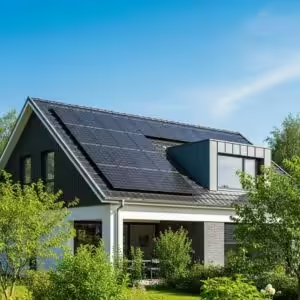

Expert Home EV Charger Installation by Sunfinity Power
Installing a home EV charger means adding dedicated charging hardware and the electrical work needed so you can plug in at home — faster, safer, and often cheaper than public charging. This guide explains how Level 1 and Level 2 chargers work, what smart chargers add, typical installation costs across Rhode Island, Massachusetts, and Connecticut, and the practical steps from first assessment to final activation. You’ll get the key decision points — daily driving needs, panel capacity, and permit rules — plus how solar pairing and available rebates can lower long‑term charging costs. We also summarize common New England incentives, outline the technical and permitting steps installers follow, and show how combining solar with storage cuts your per‑mile energy expense. Finally, learn how Sunfinity Power’s residential teams simplify integrated projects and support homeowners with quotes and discovery calls.
What Are the Different Types of Home EV Chargers and Their Benefits?
Home chargers generally fall into three useful groups: portable Level 1 cords that plug into a standard outlet, wall‑mounted Level 2 units that require a dedicated 240V circuit, and smart chargers that add connectivity and energy management. Level 1 is simple and inexpensive but slow. Level 2 provides higher voltage and current for much faster charging and meets most daily needs. Smart chargers layer scheduling, load management, and solar coordination so you can shift charging to low‑cost hours or align it with on‑site generation. Knowing these differences helps you choose equipment based on commute length, daily energy use, and your home’s electrical limits.
Below is a compact comparison summarizing voltage, typical charge rate, cost guidance, and recommended use cases to help you decide quickly.
Different charger types compared by voltage, speed, cost, and use case:
| Charger Type | Typical Voltage / Amperage | Typical Charge Speed (mi/hr) | Typical Cost (hardware only) |
|---|---|---|---|
| Level 1 EV charger | 120V / 12–16A | 2–5 mi/hr | Low (minimal hardware cost) |
| Level 2 EV charger | 240V / 16–40A+ | 12–30 mi/hr | Moderate to higher (hardware & install) |
| Smart EV charger | 240V / networked 16–80A | 12–30 mi/hr with scheduling | Higher (adds connectivity features) |
In short: Level 1 is fine for low‑mileage drivers and occasional top‑ups, Level 2 is the practical choice for daily commuters, and smart chargers are ideal if you want lower operating costs and smooth integration with solar. The next section looks closer at speed and compatibility between Level 1 and Level 2 units.
How Do Level 1 and Level 2 Chargers Compare in Speed and Compatibility?
Level 1 chargers use a standard 120V outlet and typically add about 2–5 miles of range per hour — useful for overnight top‑ups on short commutes. Level 2 chargers require a dedicated 240V circuit and commonly deliver 12–30 miles per hour depending on the charger’s amperage and your vehicle’s onboard charger limits, so most drivers can fully recharge in a few hours. Compatibility is broad: most EVs include a Level 1 cord and accept Level 2 via the J1772 connector (or via a manufacturer adapter when needed). Installation is the main difference: Level 1 usually needs no electrical work, while Level 2 often requires a new circuit and sometimes panel work — balance convenience against your long‑term charging needs when deciding.
What Features Do Smart EV Chargers Offer for Residential Use?
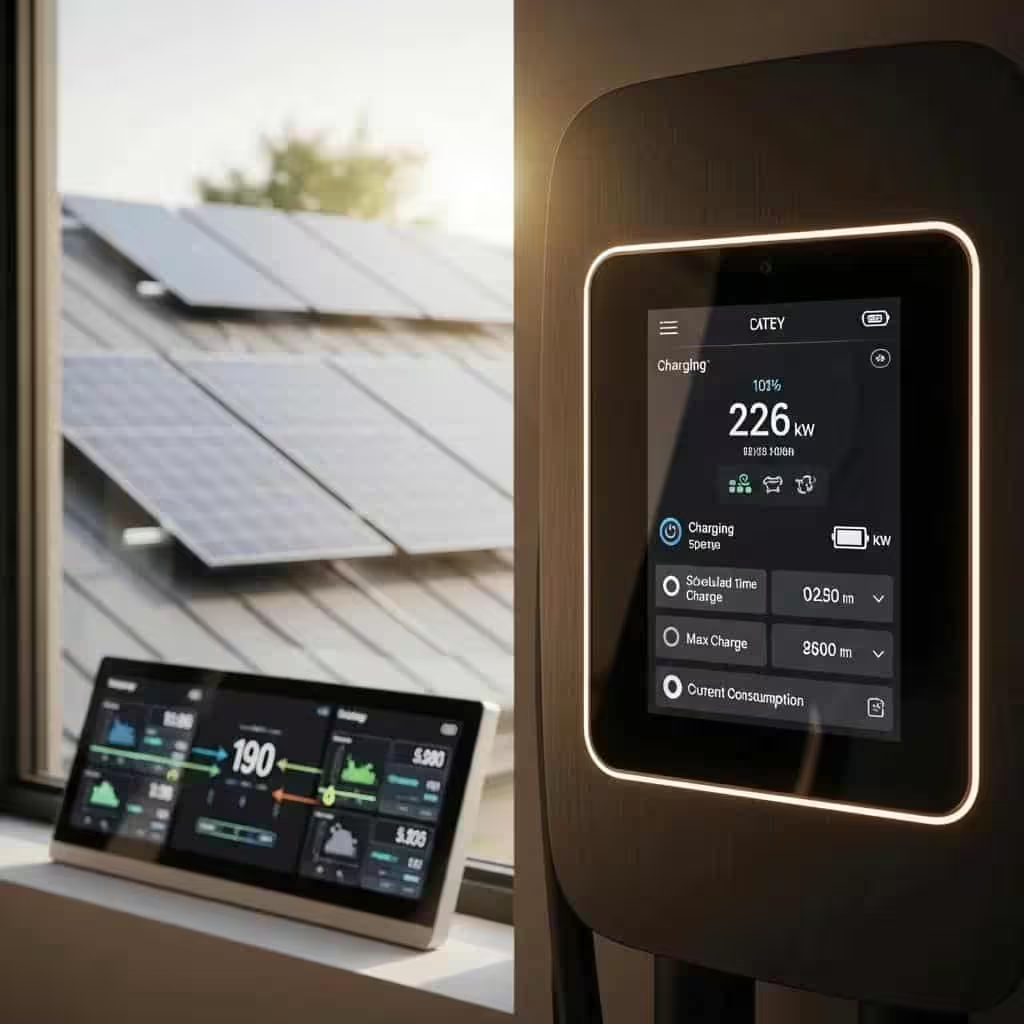
Smart chargers add scheduling, remote monitoring, load management, firmware updates, and often APIs for integration with home energy systems. Scheduling lets you charge during off‑peak hours or when your solar panels are producing. Load management protects circuits by sharing available capacity among multiple loads or vehicles.
Companion apps and remote monitoring show energy use and cost in real time and enable firmware updates that improve features and security. The practical benefit is lower bills through time‑of‑use optimization and tight coordination with solar arrays or battery storage to maximize self‑consumption. Those savings factor into the overall ROI when you choose a smart Level 2 setup.
How Much Does EV Charger Installation Cost for Homeowners in RI, MA, and CT?
Across Rhode Island, Massachusetts, and Connecticut, a typical Level 2 home installation ranges from simple installs under $800 to full projects costing $1,500–$3,500+ when panel upgrades, long conduit runs, or permit complications are involved. The biggest cost drivers are panel capacity and any required upgrades, the distance and difficulty of the wiring run to the parking spot, and local permit and inspection fees.
Homes with adequate panel capacity and short wiring runs usually fall toward the low end; prices rise when a main panel upgrade, subpanel, or trenching is necessary. The table below breaks down common cost drivers, typical ranges, and when they apply.
Costs broken down by common drivers:
| Cost Driver | Typical Price Range | When Required / Notes |
|---|---|---|
| Electrical panel upgrade | $1,000–$3,500 | Needed if panel lacks spare capacity; older 100A panels often require an upgrade |
| Permit and inspection fees | $50–$300 | Varies by town and permit type; some municipalities only require electrical permits |
| Wiring distance / trenching | $200–$1,500+ | Long runs, conduit, or concrete cutting increase labor and materials |
Panel work is usually the single largest cost, while permits and wiring add moderate variability. Plan for potential upgrades after a site assessment so your budget and timeline stay realistic. The following sections explain these factors and how to compare electrician quotes.
What Factors Influence the Price of Level 2 EV Charger Installation?
Total cost depends on several site‑specific elements: the age and capacity of your electrical panel, the distance and obstacles between the panel and the parking spot, and the permitting process in your town, which can affect timing and inspections. Panel capacity determines whether an extra breaker can be added or if a larger service or subpanel is required — many older 100A panels need upgrades to support EV charging alongside household loads.
Longer wiring runs, underground trenching, or routing through finished walls increase materials and labor time. Permit reviews can lengthen project schedules and therefore labor windows, which affects cost. When evaluating bids, ask installers for itemized line items — panel work, wiring distance, and permit handling — so you can compare apples to apples.
Are Electrical Panel Upgrades Required and How Do They Affect Costs?
Panel upgrades are required when the existing service can’t safely accept a dedicated 240V circuit for Level 2 charging without risking overload or violating code. The scope ranges from a main service upgrade (for example, moving from an older 100A to 200A service) to adding a subpanel if the main has no spare breaker space.
Upgrade costs reflect labor, breakers, meter‑socket coordination, and any utility scheduling; they can add several thousand dollars and extend timelines by weeks due to permits and utility coordination. Homes with solar may have alternate options — qualified installers can check whether inverter capacity or existing subpanels can be used. Knowing these contingencies up front helps set realistic budgets and timelines.
What Is the Step-by-Step Process for Installing a Home EV Charger with Sunfinity Power?
Our installation process follows a clear sequence: discovery and information gathering, site assessment, permitting and scheduling, electrical work and charger mounting, and final testing with homeowner orientation. You’ll start by sharing vehicle details, parking location, and basic electrical information during a discovery call or inquiry so we can determine if an in‑person survey is needed. A site assessment verifies panel capacity, documents the panel with photos, measures the distance to the parking spot, and notes obstructions or trenching needs that affect cost. After permits and approvals are secured, we schedule installation day to run wiring, install the dedicated circuit, mount the charger, and complete commissioning and safety checks. Sunfinity Power’s in‑house teams coordinate the entire project from assessment to activation and provide discovery calls and quotes for integrated energy work.
- Initial discovery and information gathering to define scope and identify constraints.
- Site assessment to document panel photos, parking details, and wiring route options for an accurate quote.
- Permitting and scheduling to secure municipal approvals and align installer availability.
- Installation day: circuit installation, charger mounting, wiring, commissioning, inspection, and activation.
That sequence prepares homeowners for each step from first contact to activation. The subsections below explain what technicians inspect and how permitting and activation typically proceed.
How Does the Consultation and Site Assessment Work?
During the consultation and site visit, our technicians collect the details we need: vehicle make and model, typical daily mileage, garage or driveway location, and photos of the electrical panel and meter. We review panel labeling, available breaker spaces, and wire gauge, and we map the route from the panel to the parking spot to note conduit, trenching, or wall penetrations that may be required. The assessment determines whether a panel upgrade or subpanel is necessary and results in a written quote with equipment recommendations and timeline estimates. Homeowners typically receive a quote within a few business days after the visit, which also helps with rebate applications and comparison shopping. Clear expectations at this stage reduce surprises during installation and support permit submissions.
What Are the Permitting, Installation, and Activation Steps?
Permitting usually begins after an accepted quote: we submit electrical plans to the local building authority and await review — processing can take a few days to several weeks depending on the municipality. On installation day, licensed electricians install the dedicated 240V circuit, mount the charger, route conduit, and apply required labeling and protective measures to meet code. After construction, an electrical inspection verifies safety and compliance; once the inspector signs off, we complete final commissioning, pair the charger with any necessary apps or smart‑home systems, and walk the homeowner through operation and maintenance. Homeowners generally need to provide safe access during installation and share panel photos or utility account details if required for permits or rebates. These steps ensure a safe, code‑compliant home charging setup.
How Can Solar Power Integration Maximize Savings and Efficiency for Home EV Charging?
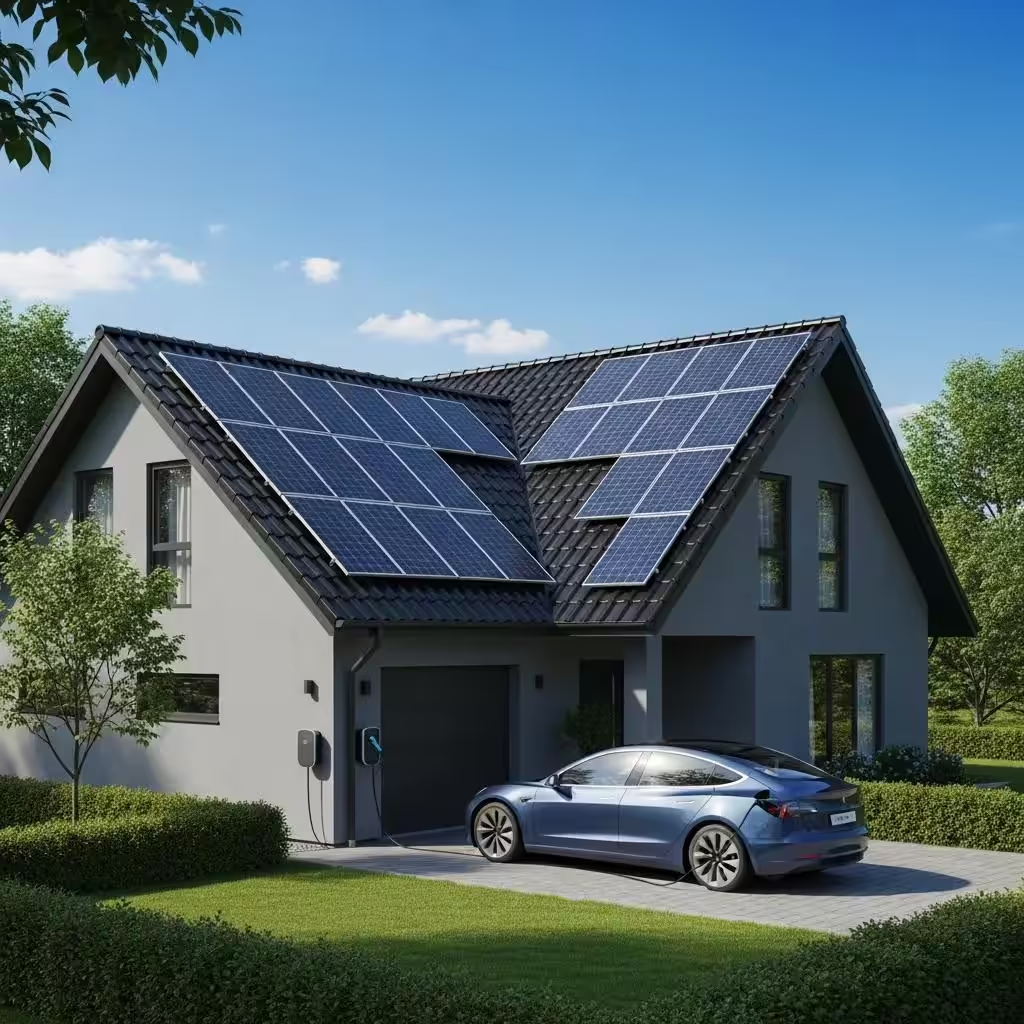
Pairing EV charging with solar can significantly lower your cost per mile by replacing grid electricity with on‑site solar, especially when you charge during midday production. Options range from simple scheduling — charge when panels produce most — to advanced setups that combine solar with battery storage so you can save midday solar for evening charging or avoid peak utility rates. The economics depend on system size, local electricity prices, and time‑of‑use tariffs; in many New England homes, combining solar with smart charging produces meaningful annual savings.
The table below compares grid‑only charging, solar‑supplemented charging, and solar‑plus‑battery scenarios to show expected relative savings and typical use cases.
| Charging Scenario | Characteristic | Estimated % Savings vs grid-only |
|---|---|---|
| Grid-only charging | No solar; charges from utility during off‑peak | Baseline (0%) |
| Solar-supplemented charging | Charge timed to solar production during day | 20–50% depending on match and rates |
| Solar + battery | Store excess solar for evening charging and TOU optimization | 30–70% depending on battery sizing and TOU pricing |
The table shows that solar increases self‑consumption and can substantially lower charging costs; adding battery storage boosts savings by enabling time‑shifted use. The sections that follow describe concrete benefits of combined solar + EV systems and which charger features enable smooth coordination.
What Are the Benefits of Combining Solar Panels with EV Chargers?
Using solar to power your EV reduces operational cost per mile by replacing utility energy with self‑generated power and can accelerate payback on a solar investment by increasing on‑site energy use. Beyond cost savings, it lowers lifecycle emissions from driving and improves resilience by providing on‑site generation that can support mobility or, when paired with batteries, offer emergency backup. The combination can also increase property appeal by adding two sought‑after upgrades — solar and EV‑ready infrastructure. Actual savings vary with system size, household patterns, and local rates, but many homeowners see tangible financial and environmental benefits when they pair smart chargers with solar.
Which Solar-Compatible Chargers Does Sunfinity Power Offer?
We evaluate and recommend chargers that are PV‑aware or accept external signals from solar inverters and battery systems. We favor features like scheduling, open APIs, and dynamic load management to maximize self‑consumption. Key capabilities include scheduled charging windows, acceptance of solar or grid signals, dynamic current control based on available capacity, and integration with home energy platforms that coordinate inverters and batteries. Our residential electrical experts check compatibility with existing solar arrays and recommend settings that reduce overall energy costs. If you’re interested in an integrated solar + EV solution, request a discovery call or site quote so we can evaluate your equipment and optimization opportunities.
What Incentives and Rebates Are Available for Home EV Charger Installation in New England?
Homeowners can often offset a significant portion of charger installation costs through federal tax credits, state rebates, and utility incentives, though eligibility and amounts vary and typically require a licensed electrician and proper permits.
At the federal level, tax provisions and national clean‑energy incentives sometimes provide credits or deductions that apply to residential clean energy projects; check current guidance when planning a project.
State and utility programs in Rhode Island, Massachusetts, and Connecticut commonly offer rebates for qualified Level 2 charger installs or for managed‑charging programs; qualification usually requires submission of invoices, permit documentation, and equipment model numbers.
Below are common incentive categories and practical tips on how to claim funds and when to involve your installer in the application process.
- Federal tax incentives can lower out‑of‑pocket costs but require accurate documentation and may depend on tax status.
- State rebate programs in New England often reimburse part of the charger hardware or installation when both equipment and installer meet program criteria.
- Utility managed‑charging incentives may include bill credits or reduced rates for customers who enroll in demand‑response or time‑of‑use programs.
After reviewing available incentives and paperwork rules, gather invoices and permit records to support claims and consider asking your installer for help with applications. Sunfinity Power can assist homeowners in identifying applicable rebates and preparing documentation for submission.
Which Federal and State Programs Support EV Charger Installation?
Federal support for residential EV infrastructure usually appears through tax provisions and national clean‑energy programs that can offset part of equipment or installation costs; eligibility varies by tax situation and current program rules. State programs in Rhode Island, Massachusetts, and Connecticut often provide targeted rebates or point‑of‑sale incentives for Level 2 chargers, typically administered by state energy offices or utilities and requiring specific equipment lists and qualified installers. Timelines and documentation vary — some programs need pre‑approval, others allow post‑install reimbursement — so keep organized records of invoices, permits, and equipment model numbers to speed claims.
How Can Homeowners in RI, MA, and CT Qualify for Utility Rebates?
To qualify for utility rebates you’ll usually need a licensed electrician to perform the install, a charger model that meets program specs, and timely submission of proof of purchase, the installation invoice, and any required permit documentation. Utilities may request specific forms, photos of the installed charger and panel labeling, and some require post‑install verification inspections. Rebates typically cover a fixed equipment amount or a percentage of installation costs, with caps and limits by program. Check program rules for pre‑approval requirements and coordinate with your installer to gather the correct paperwork; Sunfinity Power can help identify applicable rebates and prepare submissions.
Why Choose Sunfinity Power for Your Residential EV Charging Solutions?
Sunfinity Power provides integrated residential energy services — solar, roofing, and in‑house electrical work — so we can plan EV charger readiness and solar coordination together instead of as separate projects. Our local experience across Rhode Island, Massachusetts, and Connecticut helps streamline permitting and rebate capture, reducing friction from quote to activation. We focus on clear project management — coordinating assessments, permits, and installation schedules — to minimize disruption and offer a single point of responsibility for combined projects. If you’re considering solar installation plus EV charging, request a discovery call or quote so we can evaluate site‑specific opportunities and potential savings.
- Integrated services combine solar, roofing, and electrical expertise to simplify combined projects.
- Regional familiarity with New England permitting and rebate processes helps speed approvals and maximize incentives.
- Coordinated project management reduces homeowner oversight by delivering a single team to handle assessment through activation.
We position Sunfinity Power as a partner for homeowners who prefer a cohesive energy upgrade instead of piecemeal work. The sections below describe how our local expertise and integrated workflows deliver smoother projects.
How Does Sunfinity Power’s Local Expertise Benefit Homeowners?
Our presence across Rhode Island, Massachusetts, and Connecticut gives us practical experience with local building departments, common permit timelines, and utility rebate processes — knowledge that can shorten approval cycles and reduce unexpected delays. Familiarity with regional code interpretations and inspector expectations lets us prepare documentation and work plans aligned with local standards, lowering the chance of rework. Faster scheduling and response come from operating within the same service area and working closely with local subcontractors and inspectors. Homeowners gain confidence working with a provider that knows how to navigate the administrative and logistical details common to New England installations.
What Integrated Home Energy Services Does Sunfinity Power Provide?
We offer a coordinated workflow for integrated projects that aligns roofing, solar installation, and EV charger readiness to eliminate redundant work and simplify financing and scheduling across trades. Common integration paths include preparing for roof‑mounted solar during a roof replacement, sizing inverters and conduit for future EV chargers, and installing chargers or charging‑ready infrastructure at the time of solar commissioning to avoid repeated penetrations and labor. Bundling services can simplify permitting and documentation and may enable better financing by packaging electrical and renewable upgrades together. For homeowners planning combined upgrades, Sunfinity Power will recommend the most efficient sequence of work and provide a consolidated quote and discovery call to outline next steps.