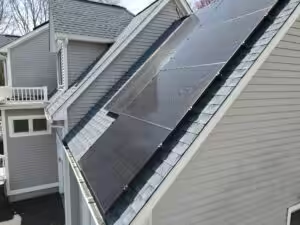

How to Choose & Install Solar Panels in MA for Maximum Savings
Tired of those sky-high electricity bills in Massachusetts? You’re not alone. With some of the nation’s highest rates, homeowners across the Bay State are discovering a powerful solution: solar energy. It’s more than just a way to save money; it’s a path to long-term financial freedom, a greener footprint, and true energy independence.
This isn’t just another guide. It’s your comprehensive roadmap to navigating the world of solar in MA. We’ll reveal why going solar here is an unbeatable choice, what truly matters when picking an installer, how much you can expect to pay (and what drives those numbers), and the incredible financing options—including zero-down pathways—that make rooftop solar surprisingly attainable. We’ll also walk you through the installation journey, smart strategies to maximize your savings, essential roof considerations, and even introduce you to some of Massachusetts’ top solar providers. By the time you’re done, you’ll have all the insights you need to confidently choose the best solar company in MA for your unique home and lifestyle.
Why Going Solar in Massachusetts is Your Smartest Move Yet
Imagine cutting your monthly energy costs, protecting your home from rising utility rates, and doing your part for the planet—all at once. That’s the power of solar installation in Massachusetts. Thanks to robust financial incentives, those notoriously high utility rates, and homeowner-friendly net-metering policies, solar systems here offer rapid payback and ongoing, significant savings. Simply put, solar converts sunlight into clean electricity, reducing what you pull from the grid and even earning you credits for excess power you send back.
Consider this: a typical 6 kW rooftop system in MA can slash your annual electricity costs by a remarkable $900–1,200. It’s no wonder solar is rapidly becoming the go-to energy solution across the Bay State!
What Are the Game-Changing Benefits of Solar Energy for MA Homeowners?
For Massachusetts homeowners, residential solar isn’t just a good idea—it’s a triple threat of advantages:
- Unbeatable Electricity Bill Savings – Every ray of sunshine your panels capture means less electricity you have to buy from the grid.
- Real Environmental Impact – By choosing clean energy, you’re actively reducing your household’s carbon footprint and contributing to a healthier planet.
- True Energy Independence – Generate your own power and benefit from supportive net-metering policies, shielding your home from unpredictable rate hikes and frustrating outages.
Here’s a quick look at how these benefits translate into real value for you:
| Benefit | How It Works for You | Your Value & Impact |
|---|---|---|
| Electricity Bill Savings | Directly offsets your grid consumption | Average annual savings of $800–1,200 |
| Carbon Emissions Reduction | Generates clean, renewable energy | Avoids 5–7 tons of CO₂ per year |
| Energy Independence | Earns net-metering utility credits | Credits roll over, significantly offsetting bills |
These powerful outcomes lay the groundwork for understanding how Massachusetts’ unique factors—from electricity rates to incentives and net-metering—supercharge your solar savings.
How Do Massachusetts' High Electricity Rates Supercharge Your Solar Savings?
Here’s the stark reality: Massachusetts residents pay some of the highest residential electricity rates in the entire U.S., averaging around $0.23 per kWh compared to the national average of $0.15. While that might sting your wallet now, it’s actually a huge advantage for solar! Why? Because every kilowatt-hour your solar system generates is worth more here. This accelerates the value of your investment, dramatically shortening your payback period.
For example, at $0.23/kWh, a 5 kW system producing 6,000 kWh annually offsets a whopping $1,380 in energy costs. Compare that to just $900 in lower-rate regions. This difference is why solar in MA often sees a rapid 6–8 year payback, making it an incredibly smart financial decision.
Massachusetts Electricity Rates and Solar Savings: A Clear Advantage
The fact that Massachusetts residents face some of the highest electricity rates in the U.S. isn’t just a burden—it’s a powerful catalyst for solar savings. These elevated rates mean that every single kilowatt-hour your solar system produces delivers maximum value, leading to faster returns on your solar investment.
U.S. Energy Information Administration, “Average Retail Price of Electricity to Residential Customers” (2024)
Which State and Federal Incentives Make Solar Unbelievably Affordable in MA?

Massachusetts isn’t just talking about clean energy; it’s putting its money where its mouth is. The state, combined with federal programs, offers an incredible suite of incentives designed to slash your upfront solar costs:
- Federal Solar Investment Tax Credit (ITC): This is huge! It provides a generous 30 percent credit on your entire system cost, though it’s set to expire after 2025, so act fast!
- MA Residential Energy Credit: A fantastic state income tax credit offering 15 percent back, up to $1,000.
- Sales Tax Exemption: Say goodbye to the 6.25 percent state sales tax on all solar equipment.
- Property Tax Exemption: Rest easy knowing that the increased value your home gains from solar won’t raise your property taxes.
- SMART Program: This innovative program pays you production-based incentives for every kWh your system generates, with even higher payments if you integrate battery storage.
These layered incentives aren’t just minor perks; they can reduce your net system cost by an astonishing 35–45 percent, making solar installation significantly more affordable than you might imagine.
Federal and State Solar Incentives: Your Path to Affordability
The powerful combination of federal and state incentives is a game-changer, dramatically reducing the initial investment required for solar panel installation in Massachusetts. With programs like the Federal Solar Investment Tax Credit and the MA Residential Energy Credit, the net cost of your solar system becomes far more accessible, putting clean energy within reach for more homeowners.
Database of State Incentives for Renewables & Efficiency (DSIRE), “Massachusetts” (2024)
How Does Net Metering Work in Massachusetts? Your Energy Bank Account
Think of Massachusetts net metering benefits as your personal energy bank account. When your solar panels produce more electricity than your home needs, that excess power is sent back to the grid. Instead of losing it, you get credited at the full retail rate! Your meter essentially spins backward, recording these kilowatt-hour credits, which then roll over month-to-month. At the end of the year, any unused credits can even convert into a monetary payment. This smart policy maximizes your return on surplus energy and helps smooth out any seasonal variations in your solar production.
Choosing Your Solar Partner: What Matters Most When Selecting the Best Solar Company in MA?
Your solar installer isn’t just a contractor; they’re your long-term energy partner. The company you choose will directly impact your system’s performance, reliability, and your satisfaction for decades to come. A truly top-tier provider combines an impeccable reputation, essential credentials, a comprehensive suite of services, and unwavering support long after installation.
Why Customer Reviews and Company Reputation Are Your Best Guides
Want the real story? Look to verified homeowner feedback. Platforms like Google Reviews, EnergySage, and SolarReviews offer invaluable insights into a company’s real-world performance and service quality. Companies consistently earning high ratings demonstrate a commitment to installation excellence, clear and honest communication, and timely project completion. Positive testimonials about professional, responsive crews are a strong signal that you’ve found a trustworthy partner who truly delivers on their promises.
Why Licenses and Certifications Like NABCEP Are Non-Negotiable for Quality Installation
When it comes to your home’s energy system, expertise matters. Licensed electricians ensure every wire and connection complies with strict state electrical codes, guaranteeing safety and efficiency. Meanwhile, NABCEP certification isn’t just a fancy acronym; it signifies a mastery of photovoltaic design and installation best practices. When you choose a company staffed by NABCEP-certified professionals, you’re choosing proven expertise in system layout, component selection, and safety protocols—all of which translate directly to optimal energy production and a flawlessly code-compliant installation.
What Services and Equipment Should a Top Solar Installer Offer?
A leading solar installer doesn’t just put panels on your roof; they provide a seamless, end-to-end solution. This means everything from an initial site assessment and custom design to handling all permitting, the actual installation, utility interconnection, and ongoing maintenance. They should also offer a diverse catalog of high-efficiency panels (think mono-crystalline, PERC, bifacial), various inverter options (string, microinverter, optimizer), and the choice of optional battery storage systems. Crucially, their service offerings should extend to remote performance monitoring, routine inspections, and prompt emergency repairs, ensuring your system is fully supported throughout its entire lifecycle.
How Do Warranties and Long-Term Support Protect Your Solar Investment?
Your solar system is a significant investment, and robust warranties are your ultimate safeguard for both the equipment and the installation itself:
- Panel Performance Guarantees: Typically 25 years, ensuring your panels produce power as promised.
- Inverter Warranties: Covering your system’s brain for 10–25 years.
- Workmanship Warranties: Protecting the installation quality for 5–10 years.
Beyond warranties, look for ongoing monitoring plans that detect any dips in production, enabling quick troubleshooting. This layered protection ensures your solar investment continues to deliver its promised benefits for decades to come, giving you ultimate peace of mind.
How Much Do Solar Panels Cost in Massachusetts and What Truly Affects the Price?
Let’s talk numbers. The cost of solar in Massachusetts is influenced by your system’s size, the quality of equipment you choose, the complexity of your home’s installation, and, crucially, the incredible incentive offsets available. Understanding these cost drivers empowers you to make smart decisions that balance your budget with optimal performance.
What Is the Average Cost per Watt for Residential Solar in MA?
Before incentives, residential solar in MA averages around $3.00 per watt. This means a typical 5 kW array might have an installed system cost of approximately $15,000. But here’s the exciting part: after factoring in those generous federal and state incentives, your net costs often drop significantly, landing closer to $9,000–10,000. That translates to an impressive $1.80–2.00 per watt, making solar a truly accessible investment.
How Do System Size and Equipment Choices Impact Your Total Cost?
It’s simple economics: larger solar systems often benefit from economies of scale. The cost per watt typically decreases by 5–10 percent for each additional kilowatt you add. Of course, choosing premium components—like ultra-high-efficiency panels, advanced inverters, or integrated battery systems—will carry a 15–25 percent higher price tag. However, these choices can significantly boost your annual energy yield and deliver a stronger long-term return on investment, making the initial extra cost well worth it.
How Do Incentives and Smart Financing Dramatically Reduce Your Upfront Expenses?
This is where solar becomes truly attainable. Those stacked incentives we discussed (the ITC, state credits, SMART payments) can effectively halve your initial outlay. When you combine these with flexible financing options—such as dedicated solar loans or leases—homeowners can secure a system with minimal or even zero down payment. This shifts what might have been a large capital expenditure into predictable, manageable monthly payments, making solar accessible to almost everyone.
How Can You Calculate Your Long-Term Solar Savings and ROI?
Want to see the numbers clearly? Here’s a simple formula to estimate your return on investment:
So, for a system with a net cost of $10,000 that saves you $1,200 annually, your payback period is approximately 8.3 years. After that, you’re looking at least 15 years (and often much more!) of nearly free energy generation. That’s a powerful return!
What Solar Financing Options Are Available for Massachusetts Homeowners? Your Path to Ownership
Understanding financing structures is key to making solar work for your budget. Massachusetts residents have a variety of flexible options, including direct purchase loans, leases, and power purchase agreements (PPAs), with many providers offering attractive zero-down programs.
How Do Solar Loans, Leases, and Power Purchase Agreements (PPAs) Differ?
Each financing option offers a unique path to solar, with distinct financial and tax implications:
- Solar Loans: This is the most popular choice for homeowners who want to *own* their system. Your loan payments replace your utility bills, and you get to claim all the valuable tax incentives and credits.
- Leases: With a lease, you pay a fixed monthly payment to use a leased system. The provider retains ownership and benefits from the incentives, which can result in lower monthly payments for you.
- PPAs (Power Purchase Agreements): Similar to a lease, but instead of a fixed payment, you pay per kWh generated by the system. This aligns your costs directly with your solar production, and no ownership is transferred.
Evaluating your long-term savings against your payment obligations is essential to choosing the option that best fits your financial goals.
What Are Zero Down Solar Programs in MA and How Do They Work?
Dreaming of solar but worried about the upfront cost? Zero down programs are designed for you! These programs bundle the entire system cost, installation, and sometimes even financing fees into convenient monthly payments, requiring no upfront capital from you. Providers often partner with trusted lenders to offer streamlined applications and favorable credit terms. The best part? You start saving on your energy bills immediately, using your solar production credits to offset your new monthly obligations.
How Do State and Federal Incentives Affect Your Financing Choices?
This is a crucial point: if you choose an ownership option like a solar loan, you’ll capture the full 30 percent Federal ITC and all state credits directly. However, with lease and PPA structures, the incentive uptake typically transfers to the provider. While this can result in lower monthly payments for you, it means you forfeit those direct tax benefits. Understanding this trade-off is critical when deciding which financing path is right for your long-term financial strategy.
What Is the Solar Installation Process for MA Homes? A Smooth Journey

Going solar might seem complex, but with the right partner, the residential solar installation process follows a clear, defined sequence designed for compliance, safety, and optimal performance. Here’s what you can expect:
What Happens During the Site Assessment and Custom Design Phase?
It all starts with a thorough understanding of your home. Your installer will conduct a detailed survey of your roof’s orientation, pitch, any potential shading issues, and your existing electrical infrastructure. This crucial step allows them to optimize panel placement for maximum sunlight exposure. Based on this assessment, they’ll create a customized system design, meticulously calculating the ideal panel count, inverter type, and wiring layout to meet your energy goals while strictly adhering to all local code requirements.
How Are Permits and Approvals Managed in Massachusetts?
Don’t worry about the paperwork! Your installer will handle all the necessary heavy lifting. They’ll submit electrical and building permit applications to your municipal authorities, often leveraging streamlined solar installation in Boston permit programs available in cities like Boston and Worcester. Once permits are secured, they’ll manage the interconnection agreements with your utility company, following standardized processes governed by the state Department of Public Utilities. It’s a seamless process, handled by the experts.
What Should You Expect During Installation Day and System Activation?
Installation day is exciting! Professional crews will arrive to carefully mount the rail systems, securely attach your solar panels, and complete all necessary wiring to your inverter and meter. Once the physical installation is complete, final inspections will be conducted by local authorities. After receiving permission to operate from your utility, your system will be activated, and you’ll immediately begin tracking your energy production in real time via user-friendly monitoring platforms. Welcome to clean energy!
How Can You Maximize Your Solar Savings and Energy Independence in Massachusetts?
Installing solar is just the first step. Strategic decisions and ongoing monitoring ensure your system delivers peak performance and extended benefits for years to come.
How Do You Optimize System Size and Panel Efficiency for MA Homes?
The key to maximizing your savings is a perfectly sized system. Matching your system size to your historical energy use prevents oversizing, which can unnecessarily inflate costs. Additionally, opting for high-efficiency panels (those with 20 percent+ efficiency) is crucial, especially if you have limited roof space, as they maximize output per square foot. Your installer will use performance modeling tools to forecast annual generation based on local irradiance data, guiding the optimal array design for your home.
What Role Does Battery Storage Play in Increasing Your Solar Benefits?
Ready to take your energy independence to the next level? Battery storage systems are a game-changer. They store any excess electricity your panels generate during the day, allowing you to use it in the evening or during power outages. This boosts your self-consumption from roughly 50 percent to over 80 percent! Plus, under the SMART program, integrating storage can increase your incentive payouts, further improving your financial returns and enhancing your home’s resilience against grid disruptions.
How Can You Monitor and Maintain Your Solar System for Long-Term Savings?
Staying informed is easy. Modern solar systems come with online dashboards and mobile apps that provide continuous visibility into your energy production and system health. This allows you to track your savings and quickly detect any potential issues. Scheduled maintenance—such as occasional module cleaning and periodic electrical checks—ensures your panels and inverters operate at their rated capacity, preserving your annual savings and extending your system’s longevity for decades.
What Are the Options and Benefits of Solar Roof Upgrades in Massachusetts?
Sometimes, your roof’s condition or design might present a hurdle to going solar. But don’t worry! Integrated roofing solutions offer a fantastic opportunity to deliver both superior protection for your home and powerful energy generation.
When Is a Roof Upgrade Absolutely Necessary Before Solar Installation?
If your roof is nearing the end of its lifespan (typically within 5 years) or shows signs of structural compromise, a roof replacement with solar installation is highly recommended. This proactive step avoids the significant cost and hassle of having to remove and reinstall your panels later. A qualified roofer should assess your decking integrity, flashing needs, and overall membrane suitability to ensure a solid foundation for your solar investment.
What Are Integrated Solar Roofing Solutions Like Tesla Solar Roof?
For a truly seamless aesthetic, consider integrated solar roofing solutions. Products like solar shingles and tiles are designed to blend directly into your roofing materials, providing an all-in-one weatherproof and power-producing solution. While these options eliminate the need for separate panel mounting hardware, they often come with a premium price tag and require specialized installation expertise. They’re a fantastic choice for new builds or complete roof replacements where aesthetics are a top priority.
What Structural Requirements Should Homeowners Know About?
Your roof’s framing must be robust enough to bear the added weight of solar modules and racking (typically around 3–5 lbs per square foot). Beyond weight, factors like wind uplift resistance, fire ratings, and Energy Star compliance are crucial roof replacement considerations that your installer will factor into material selection and installation methods. Rest assured, a reputable solar company will ensure your roof is structurally sound and compliant with all safety standards.
Which Are the Top-Rated Solar Companies in Massachusetts Based on Key Criteria?
When it comes to choosing your solar partner, some providers simply stand out. Leading companies distinguish themselves through their stellar reputation, the breadth of services they offer, and their commitment to transparent pricing.
How Do Leading Companies Compare in Reputation, Services, and Pricing?
The best solar companies in Massachusetts consistently boast robust online ratings (think 4.5 stars and above). They offer truly turnkey services, guiding you from initial design and permitting to financing and ongoing maintenance. Crucially, they present clear, itemized proposals with tiered equipment options, allowing you to choose what fits your budget and performance goals. Their cost per watt and warranty terms should align with or even exceed industry standards, giving you confidence in your investment.
What Do Customer Reviews Truly Reveal About These Solar Providers?
Dive into customer reviews, and you’ll discover the true character of a solar provider. Look for consistent praise regarding punctual project timelines, the professionalism of installation crews, effective and proactive communication, and responsive post-installation support. Companies that excel in responsive service and genuinely care about their customers tend to build lasting relationships, often retaining clients for future expansion projects or battery upgrades. This is a strong indicator of a company you can trust.
How Do Certifications and Warranties Differ Among Top Installers?
While all major installers hold the required electrical licenses, the truly top-tier companies go above and beyond. Look for those with NABCEP-certified staff, as this signifies a higher level of expertise and commitment to quality. Extended workmanship warranties (up to 10 years) offer an extra layer of assurance. Additionally, pay attention to how performance guarantees and production monitoring service agreements vary among providers, as these can significantly influence your long-term reliability and peace of mind.
Your Top Questions About Solar in Massachusetts, Answered!
It’s natural to have questions when considering a significant home upgrade like solar. Homeowners often wonder if the investment is truly justified, what the real costs are, and how to best leverage incentive programs. Here are clear, concise answers to demystify these key concerns and guide your decision process.
Is Solar Worth It in Massachusetts?
Absolutely! Solar proves incredibly worthwhile in Massachusetts. Thanks to elevated utility rates, a powerful combination of federal and state incentives, and homeowner-friendly net-metering policies, a typical system pays for itself in a remarkably short 6–10 years. After that, you’ll enjoy 25+ years of significantly reduced, low-cost electricity, making it an undeniable long-term financial win.
How Much Do Solar Panels Cost in MA?
Before incentives, installed system costs average around $3.00 per watt. However, after factoring in the generous 30 percent Federal ITC and state credits, the net cost typically falls to $1.80–2.00 per watt. This means a 5 kW array, a common size, will usually have a net price near $9,000–10,000, making it a surprisingly accessible investment.
What Is the SMART Program and How Does It Benefit Homeowners?
The SMART Program (Solar Massachusetts Renewable Target) is a fantastic state incentive that pays you production-based incentives. These payments range from $0.05 to $0.20 per kWh, depending on your project size and additional “adders” for things like battery storage or if you qualify as low-income. These recurring payments significantly enhance your project’s cash flow and further shorten your payback period, making solar even more attractive.
How Can I Qualify for Zero Down Solar in Massachusetts?
Qualifying for zero down solar typically involves a credit check, proof of home ownership, and income verification. Many reputable solar providers partner with lenders to offer streamlined application processes. This means if you have solid credit, you can often install solar with no upfront capital, allowing you to start saving on your energy bills immediately.
What Are the Benefits of Solar Battery Storage in MA?
Adding battery storage to your solar system in MA offers multiple powerful benefits. It dramatically increases your self-consumption of solar production to 70–90 percent, provides essential backup power during grid outages, and unlocks higher SMART program adders, boosting your incentives. This combination significantly enhances your energy independence and builds incredible resilience against any grid disruptions.
Massachusetts’ high electricity rates, generous incentives, and supportive regulations create an incredibly powerful environment for residential solar adoption. By thoughtfully evaluating factors such as an installer’s reputation, equipment quality, flexible financing options, and comprehensive warranty coverage, you can confidently select the best solar company in MA to maximize your savings and achieve true energy independence. Whether you’re envisioning a standard rooftop array, integrating cutting-edge battery storage, or exploring sleek solar roofing, your path to clean, affordable energy in Massachusetts is clearer than ever. Take the next exciting step: request personalized quotes and detailed proposals from leading installers today, and begin your transformative solar journey!