
Sunfinity Power: How to Calculate Your Home Solar System Size
Step-by-Step Guide to Calculating Your Solar System Size
Determining the appropriate size for a solar system is crucial for homeowners looking to harness solar energy effectively. This article will guide you through the process of calculating your solar panel requirements, ensuring you make informed decisions that align with your energy needs. Understanding how to size a solar system involves evaluating your home energy consumption, calculating the necessary solar panel output, and considering roof suitability. Additionally, financial analysis and available incentives play a significant role in the decision-making process. By the end of this article, you will have a comprehensive understanding of how to assess your solar needs and the support available from Sunfinity Power, a leading provider in solar and roofing services.
The broader adoption of solar energy for homes hinges on effectively determining the optimal size for residential photovoltaic systems.
Assessing Your Home Energy Use

To accurately size your solar system, the first step is to assess your home energy use. This involves analyzing your utility bills, conducting a home energy audit, and identifying peak usage times. By understanding your energy consumption patterns, you can determine how much energy your solar system needs to generate.
- Analyze Utility Bills: Review your past utility bills to identify your average monthly energy consumption in kilowatt-hours (kWh). This data provides a baseline for your solar energy needs.
- Conduct a Home Energy Audit: A professional energy audit can help identify areas where you can improve energy efficiency, potentially reducing the size of the solar system you need.
- Identify Peak Usage Times: Understanding when your household uses the most energy can help you optimize your solar system’s output to meet those demands.
Sunfinity Power specializes in educating homeowners about the benefits of solar energy, helping you understand how to maximize your energy savings through effective solar system sizing.
Calculating Solar Panel Output Needs
Once you have a clear picture of your energy consumption, the next step is calculating the solar panel output needs. This involves understanding panel efficiency, calculating system size based on energy needs, and consulting professionals for tailored advice.
Various studies underscore the importance of precise calculation methods for designing residential solar power generation systems to meet specific energy demands.
- Understand Panel Efficiency: Solar panels vary in efficiency, typically ranging from 15% to 22%. Higher efficiency panels produce more energy in a smaller space, which can be beneficial if roof space is limited.
- Calculate System Size Based on Energy Needs: To determine the size of the solar system you need, divide your total energy consumption (in kWh) by the average solar production per panel per year. This calculation will give you the number of panels required.
- Consult Professionals for Tailored Advice: Engaging with solar energy professionals can provide insights into the best system size and configuration for your specific needs.
By accurately calculating your solar panel output needs, you can ensure that your system will meet your energy demands effectively.
Roof Suitability and Space Considerations
Evaluating your roof’s characteristics is essential for solar panel installation. Factors such as roof condition, orientation, shading, and structural integrity must be considered to ensure optimal performance.
Accurately estimating the energy capacity that can be generated from residential rooftops is a fundamental aspect of planning a solar installation.
- Assess Roof Condition: Ensure your roof is in good condition and can support the weight of solar panels. If repairs are needed, it’s best to address them before installation.
- Evaluate Orientation and Shading: South-facing roofs typically receive the most sunlight, making them ideal for solar panels. Additionally, assess any shading from trees or buildings that could impact solar production.
- Consider Structural Integrity: A thorough inspection of your roof’s structure is necessary to confirm it can handle the installation of solar panels without compromising safety.
Understanding these factors will help you determine if your roof is suitable for solar panel installation and what adjustments may be necessary.
Financial Analysis and Incentives
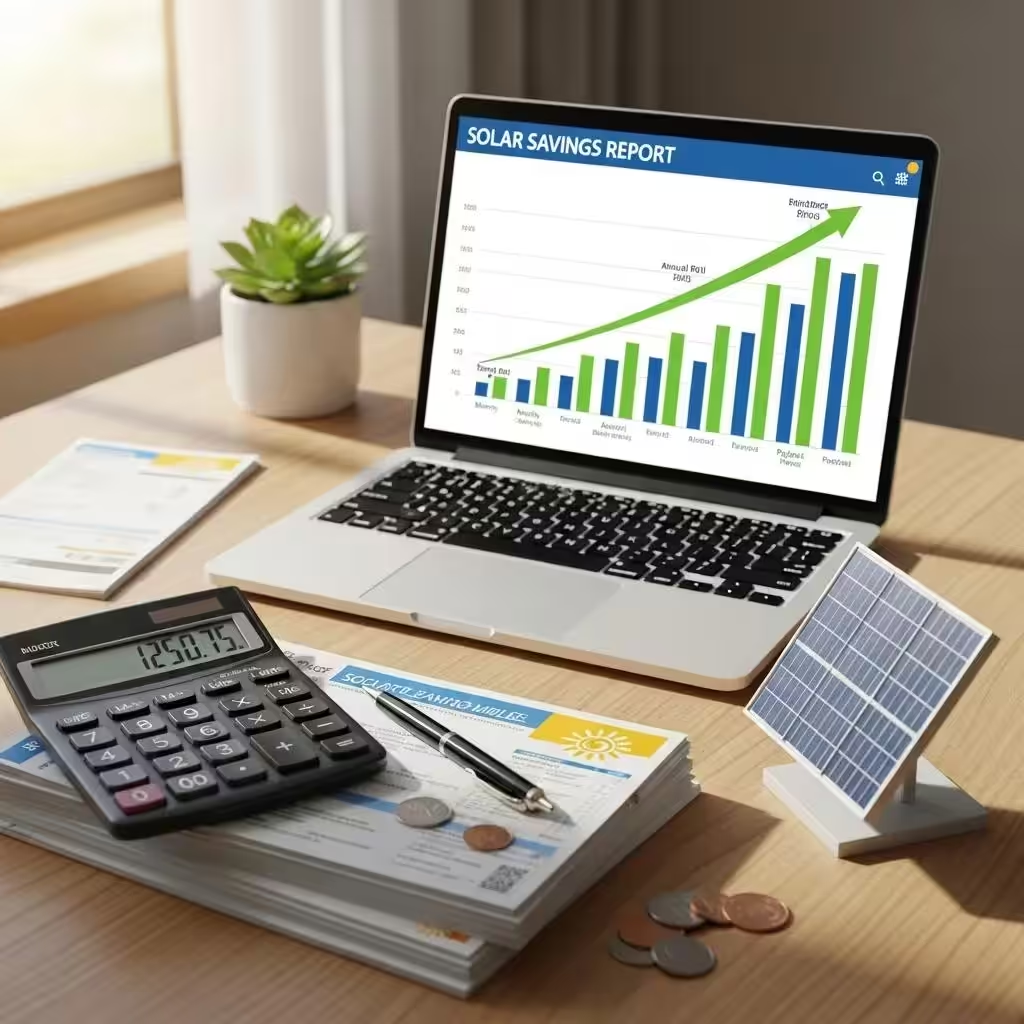
Exploring the financial benefits and incentives for solar installations is a critical aspect of the decision-making process. Identifying state and local incentives, calculating potential savings, and discussing payback periods can significantly influence your investment.
- Identify State and Local Incentives: Many states offer tax credits, rebates, and other incentives to encourage solar adoption. Researching these options can help reduce the overall cost of your solar system.
- Calculate Potential Savings: Estimate your potential savings by comparing your current energy costs with projected solar energy production. This analysis can help you understand the long-term financial benefits of going solar.
- Discuss Payback Periods: Understanding the payback period, the time it takes for your savings to equal your initial investment, is crucial for evaluating the financial viability of your solar system.
| Incentive Type | Description | Value |
|---|---|---|
| State Production Incentives | Performance-based payments for solar energy produced (e.g., RI REG, MA SMART) | Varies by program |
| State Rebate Programs | Cash rebates for solar system installations | Varies by state |
| Net Metering | Credit for excess energy produced | Varies by utility |
This financial analysis highlights the importance of understanding available incentives and how they can impact your overall investment in solar energy.
How Sunfinity Power Supports Your Solar Journey
Sunfinity Power is dedicated to supporting homeowners throughout their solar journey. With a focus on education and personalized service, they provide tailored solutions to meet individual energy needs.
- Personalized Solar Savings Reports: Sunfinity Power offers detailed reports that outline potential savings and system recommendations based on your specific energy consumption.
- Discovery Calls for Tailored Advice: Their team is available for discovery calls to discuss your solar options and answer any questions you may have about the installation process.
- Integrated Roofing and Solar Solutions: As a provider of both roofing and solar services, Sunfinity Power can ensure that your solar installation is seamlessly integrated with your home’s existing structure.
By choosing Sunfinity Power, you gain access to expert guidance and support, making your transition to solar energy as smooth as possible.
To further explore your options, consider requesting a personalized solar savings report from Sunfinity Power. This report can provide a detailed analysis of potential savings based on your specific energy consumption.
Additionally, if you’re considering a new roof along with your solar installation, Sunfinity Power offers comprehensive roofing services to ensure your home is ready for solar. This integrated approach can streamline the process and ensure optimal performance.
For tailored advice and to discuss your solar options, schedule a solar discovery call with their team. They can answer any questions you may have about the installation process and help you determine the best system size for your needs.
How to Read Your Electric Bill to Calculate Solar System Size
Understanding your electric bill is a fundamental step in accurately sizing your solar system. Most utility bills provide a detailed summary of your energy consumption, typically measured in kilowatt-hours (kWh). To find your monthly kWh usage, look for a section labeled “Energy Usage,” “Electricity Usage,” or “Meter Readings.” This section usually lists the total kWh consumed during the billing period, which is often about 30 days.
It’s important to review your electric bills over the past 12 months to account for seasonal variations. For example, in Rhode Island and the broader New England region, summer months often see higher energy use due to air conditioning, while winter months may have increased heating loads if you use electric heat pumps or baseboard heaters. By calculating the average monthly kWh usage over the year, you get a baseline for your solar system size. However, the highest-usage month is critical because your solar system should be able to cover peak demand periods to maximize savings.
Additionally, some electric bills include peak demand charges, which are fees based on the highest rate of electricity use during a short period (usually 15 minutes). While these charges are more common in commercial accounts, some residential customers may see them. Understanding peak demand can help you decide if you need a larger system or battery storage to reduce these charges.
To calculate your annual average monthly usage, add the kWh from each month’s bill and divide by 12. This average helps estimate your typical energy needs, but remember to size your system to cover your highest monthly usage to avoid shortfalls during peak consumption periods.
Solar System Size Calculator - Step-by-Step Formula
Calculating the size of your solar system can be simplified using a straightforward formula based on your energy consumption and local solar conditions. Here’s a step-by-step guide:
- Determine Daily Energy Usage: Divide your average monthly kWh usage by 30 to find your daily kWh needs.Example: 900 kWh/month ÷ 30 = 30 kWh/day
- Calculate System Size in kW: Divide your daily kWh needs by the average peak sun hours in your location. Peak sun hours represent the equivalent number of hours per day when solar irradiance averages 1,000 watts per square meter.Example (Rhode Island): 30 kWh/day ÷ 4.2 peak sun hours = 7.14 kW system size
- Determine Number of Panels: Divide the system size in kW by the wattage of each panel (in kW). For example, a 400W panel is 0.4 kW.Example: 7.14 kW ÷ 0.4 kW per panel = approximately 18 panels
This calculation provides a solid estimate of the number of panels and system size needed to meet your energy consumption. Keep in mind that factors such as shading, panel orientation, and system losses may require adjustments.
System Size by Home Size Table
Below is an estimated guide for solar system sizes and costs based on typical home sizes in Rhode Island and the New England region. These estimates are before applying any available state incentives.
| Home Size (sq ft) | Estimated System Size (kW) | Approximate Number of Panels (400W each) | Estimated Cost Range (Before Tax Credit) |
|---|---|---|---|
| 1,000 | 4-5 | 8-12 | $12,000 – $16,000 |
| 1,500 | 6-7 | 14-17 | $16,000 – $21,000 |
| 2,000 | 8-9 | 18-22 | $22,000 – $27,000 |
| 2,500 | 10-11 | 24-27 | $27,000 – $32,000 |
| 3,000 | 12-14 | 28-34 | $32,000 – $40,000 |
These figures provide a general framework, but actual system size and cost will depend on your specific energy use, roof space, and equipment choices.
Rhode Island Peak Sun Hours
Rhode Island receives an average of approximately 4.2 peak sun hours per day annually. This means that on average, the sun provides the equivalent of 4.2 hours per day of full solar intensity (1,000 watts per square meter). Seasonal variations are significant:
- Summer (June-August): 5.2 to 5.8 peak sun hours per day
- Spring/Fall: 3.8 to 4.5 peak sun hours per day
- Winter (December-February): 2.8 to 3.4 peak sun hours per day
Compared to the national average of about 4.5 peak sun hours per day, Rhode Island is slightly below average but still offers very viable conditions for solar energy production. The state’s solar potential is enhanced by strong local incentives, including net metering policies and the Renewable Energy Fund, which help offset the slightly lower solar irradiance.
Additionally, state incentives and net metering can significantly reduce the effective cost of solar installations, making solar power an attractive investment for Rhode Island homeowners despite the modestly lower sun exposure.
Massachusetts and Connecticut Sun Hours
Massachusetts and Connecticut, neighboring states in New England, have solar irradiance levels similar to Rhode Island, making them excellent markets for residential solar.
- Massachusetts (Boston area): Averages between 4.3 and 4.5 peak sun hours per day annually.
- Connecticut (Hartford/New Haven area): Averages between 4.2 and 4.4 peak sun hours per day annually.
The primary utilities serving these regions include Eversource and National Grid, both of which offer net metering programs that credit solar customers for excess energy sent back to the grid. These policies improve the financial return on solar investments.
Massachusetts is known for having some of the strongest solar incentives in the nation, including the SMART (Solar Massachusetts Renewable Target) program, which provides performance-based incentives. Connecticut offers innovative financing options through the Green Bank loan programs, making solar more accessible to homeowners.
These incentives, combined with favorable sun hours and utility policies, make Massachusetts and Connecticut highly attractive for solar installations.
How Battery Storage Affects System Sizing
Adding battery storage to your solar system, such as a Tesla Powerwall or Enphase IQ Battery, can influence how you size your solar array depending on your goals.
For most grid-tied homes with net metering, batteries are used primarily for self-consumption optimization, storing excess solar energy during the day to use at night. In these cases, the solar system size typically does not need to be increased because the grid acts as a virtual battery, allowing you to draw power when needed.
However, if your goal is to have backup power during outages, especially for critical loads over 12 to 24 hours, you may want to oversize your solar system by 20-30%. This extra capacity ensures the battery can be fully charged and provide sufficient energy during extended grid outages.
It’s important to distinguish between two sizing strategies:
- Self-Consumption Optimization: Focuses on maximizing the use of solar energy within your home, reducing grid reliance and utility bills without necessarily increasing system size.
- Whole-Home Backup: Requires a larger system and battery capacity to maintain power during outages, which may increase upfront costs but provides energy security.
Consulting with solar professionals can help determine the best approach based on your energy goals and budget.
Common Sizing Mistakes Homeowners Make
When sizing a solar system, homeowners often make mistakes that can affect system performance and financial returns. Here are some common pitfalls to avoid:
- Undersizing by Using Only Current Usage: Failing to account for future increases in energy consumption, such as new appliances or electric vehicles, can lead to a system that doesn’t meet your needs over time.
- Ignoring EV Charger Loads: Electric vehicle charging can add 2,000 to 4,000 kWh per year to your energy use. Not including this in your calculations can result in undersized systems.
- Not Accounting for Electric Heat Pump or Water Heater Conversions: Switching from fossil fuels to electric heating increases electricity demand, which should be factored into system sizing.
- Forgetting Shading from Trees or Neighboring Rooftops: Shading reduces solar panel output. Overlooking this can cause overestimation of system production.
- Over-Relying on Square Footage Alone: Using home size as the sole metric without reviewing actual utility bills can lead to inaccurate sizing.
- Not Planning for Household Growth: Changes such as additional family members or home expansions increase energy needs and should be anticipated.
Avoiding these mistakes ensures your solar system is appropriately sized to maximize benefits and avoid costly upgrades later.
How Sunfinity Sizes Systems for RI/MA/CT Homes
Sunfinity Power offers a comprehensive and personalized approach to solar system sizing for homeowners in Rhode Island, Massachusetts, and Connecticut. Their process includes:
- Reviewing 12 Months of Utility Bills: This provides an accurate picture of your energy consumption patterns, including seasonal variations and peak usage.
- Conducting a Roof Assessment: Using advanced software, Sunfinity evaluates your roof’s angle, orientation, and shading to determine optimal panel placement and system size.
- Evaluating Electrical Panel Capacity: Ensuring your home’s electrical system can safely accommodate the solar installation without costly upgrades.
- Factoring in Local Incentives and Net Metering Rates: Sunfinity’s local expertise allows them to incorporate state-specific incentives and utility policies into your system design for maximum financial benefit.
- Presenting a Custom Production Estimate: You receive a detailed report showing expected annual kWh offset, helping you understand your potential savings and environmental impact.
With deep knowledge of regional utility rules and sun patterns, Sunfinity Power provides tailored solutions that maximize your solar investment. To get started, schedule a free site assessment and consultation with their expert team.
Ready to Find Your Perfect Solar System Size?
Contact Sunfinity Power today for a free, personalized solar assessment tailored to your home in Rhode Island, Massachusetts, or Connecticut.
Frequently Asked Questions (FAQ)
What size solar system do I need for a 2,000 sq ft home?
The size of the solar system you need depends primarily on your energy consumption rather than just the square footage of your home. In Rhode Island, Massachusetts, and Connecticut, a typical 2,000 sq ft home uses between 700 and 1,100 kWh per month. Using the solar sizing formula, this translates to an 8 to 10 kW system, which usually requires 18 to 24 solar panels rated at 400 watts each. It’s important to review your actual utility bills to get an accurate estimate and consult with a solar professional to tailor the system to your specific needs.
How many solar panels do I need to power my house in Rhode Island?
In Rhode Island, the average home uses about 850 kWh per month, and the state receives approximately 4.2 peak sun hours per day. Using 400-watt panels, a homeowner would typically need between 18 and 22 panels to install a 7 to 9 kW system capable of meeting their energy needs. This number can vary based on your actual consumption, roof space, and shading conditions.
Should I oversize my solar system?
Modest oversizing of your solar system by 10-15% is often a smart strategy. It accounts for panel degradation over time, future increases in energy use such as electric vehicle charging or heat pump installations, and helps maximize net metering credits by producing slightly more energy than your current needs. However, oversizing too much can increase upfront costs without proportional financial benefits, so it’s best to balance your current and anticipated future needs with budget considerations.
Does system size affect available solar incentives?
Available state incentives and net metering apply based on your system and energy production, and program value can scale with system size. There is no maximum system size limit for residential installations, so you can size your system according to your energy needs and financial goals. A tax advisor can confirm any federal incentives that currently apply.
How do I know if my roof can fit enough panels?
A standard 400-watt solar panel typically measures about 18 to 22 square feet. For example, a 10 kW system requiring 25 panels would need roughly 500 to 550 square feet of unshaded roof space. South- or west-facing roofs with a pitch between 20 and 40 degrees are ideal for maximizing solar production. A professional site assessment will evaluate your roof’s size, orientation, shading, and structural condition to confirm if it can accommodate the desired number of panels and recommend the optimal layout.
What happens if my solar system is too small?
If your solar system is undersized, it will only offset a portion of your electricity consumption. You will still need to draw power from the grid for the remainder, which means you will continue to pay utility bills, albeit at a reduced rate. An undersized system may limit your financial savings and reduce the benefits of net metering, as you won’t be generating enough excess energy to maximize credits. Planning for an appropriately sized system helps ensure you get the best return on your investment.