
PACE Financing for Solar in Rhode Island & Connecticut: Complete Guide

Solar PACE Financing in RI & CT: Eligibility, Application & Benefits
PACE financing, or Property Assessed Clean Energy financing, is a revolutionary approach that enables homeowners to install “solar panels” and make energy-efficient upgrades without the burden of upfront costs. This financing mechanism allows property owners to pay for these improvements over time through their property tax bills, making solar energy more accessible and affordable. In this comprehensive guide, we will explore the intricacies of PACE financing in Rhode Island and Connecticut, including eligibility criteria, the application process, and the numerous benefits of integrating solar panels with roofing solutions. Homeowners often face challenges in financing solar installations, but PACE financing offers a viable solution that promotes energy independence and enhances property value. We will delve into the specific steps involved in applying for PACE loans, the advantages of combining solar and roofing, and where to find support and resources for homeowners interested in this financing option.
What Is PACE Financing and How Does It Facilitate Solar Panel Installation?
PACE financing is a unique funding mechanism that allows homeowners to finance energy-efficient improvements, such as solar panel installations, through property tax assessments. This approach enables homeowners to spread the cost of these upgrades over a period of time, typically 10 to 20 years, making it financially manageable. The key benefit of PACE financing is that it allows homeowners to install solar panels without any upfront costs, as the financing is tied to the property rather than the individual. This means that if the homeowner sells the property, the new owner assumes the remaining payments, making it an attractive option for many.
Indeed, the fundamental nature of PACE programs is to facilitate such upgrades through a unique financing structure.
PACE Programs: Financing Energy & Renewable Upgrades
Property Assessed Clean Energy (PACE) programs finance energy efficiency and renewable energy improvements for residential and commercial properties with a special tax assessment added to property taxes.
Benefits of Property Assessed Clean Energy Programs and Securitization of Property Assessed Clean Energy Loans, 2024
Understanding Property Assessed Clean Energy Programs in Rhode Island and Connecticut
In Rhode Island and Connecticut, PACE programs are designed to promote clean energy and energy efficiency. These programs offer various incentives for homeowners to adopt solar technology. In Rhode Island, the PACE program provides financing for up to 100% of the project cost, allowing homeowners to make significant energy improvements without financial strain. Connecticut’s PACE program similarly supports homeowners by offering financing that can be repaid through property taxes, making solar installations more accessible. Both states’ programs may involve private capital providers and local government assessments in the financing process.
How PACE Financing Enables Affordable Solar and Roofing Solutions
PACE financing facilitates affordable solar and roofing solutions by providing flexible payment options and eliminating the need for upfront costs. Homeowners can benefit from long-term savings on energy bills while enhancing their property value. The financing structure allows for manageable monthly payments that align with the homeowner’s budget, making it easier to invest in solar technology and roofing improvements simultaneously.
What Is PACE Financing — In Depth
Property Assessed Clean Energy (PACE) financing is a specialized financing mechanism designed to help property owners fund energy efficiency, renewable energy, and water conservation improvements without the need for upfront capital. Unlike traditional loans, PACE financing is attached to the property itself rather than the individual borrower. This means that the repayment obligation is secured through a special assessment added to the property tax bill, rather than through monthly loan payments to a lender.
The repayment is collected by the local government as part of the property tax bill, typically on a semi-annual or annual basis, depending on the jurisdiction. This structure allows the financing to transfer automatically to the new owner if the property is sold, since the obligation is tied to the property, not the individual. This unique lien structure is both a strength and a consideration: it facilitates access to clean energy upgrades for homeowners who might not qualify for traditional loans, but it also creates a senior lien on the property that can affect refinancing or sale.
PACE financing originated in California in 2008 as a response to the barriers many homeowners faced in accessing affordable financing for clean energy improvements. The goal was to create a mechanism that would overcome the upfront cost hurdle and align repayment with the long-term benefits of energy savings. Since then, PACE programs have expanded nationwide, with many states adopting enabling legislation and establishing programs tailored to their markets.
The property-lien structure is a key feature of PACE financing. Because the assessment is secured by a lien on the property, it typically takes priority over other liens, including mortgages. This priority status can be a concern for mortgage lenders, which has led to some restrictions and requirements in certain markets. However, the lien also provides security to capital providers, enabling them to offer financing at competitive rates and terms.
How PACE Works Step by Step in Rhode Island and Connecticut
The PACE financing process in Rhode Island and Connecticut follows a structured sequence designed to ensure transparency, eligibility, and successful project completion. Here is a detailed walkthrough of the typical steps involved:
- Homeowner Applies Through a PACE Provider or State Program: The process begins when a property owner contacts a PACE program administrator or an approved PACE provider to express interest and submit an application. This initial step includes providing basic property information and project goals.
- Property Assessment and Approval: The PACE administrator conducts a property assessment to verify eligibility. Unlike traditional loans, credit score is often not the primary factor; instead, the focus is on the equity in the property and the property’s tax payment history. The property must have sufficient equity, typically at least 10-15%, and no outstanding tax delinquencies or bankruptcies.
- Contractor Selected and Project Scoped: Once approved, the homeowner selects a qualified contractor to scope the project, provide detailed cost estimates, and outline the improvements to be made. The project scope must comply with program guidelines and eligible improvements.
- Project Completed and Inspected: After financing is secured, the contractor completes the installation of solar panels or other energy improvements. The project is then inspected to ensure it meets quality and safety standards.
- Assessment Added to Property Tax Bill: Upon successful completion and inspection, the PACE assessment is recorded as a lien on the property and added to the property tax bill. This special assessment reflects the financed amount plus interest and fees.
- Repayment Begins: The homeowner begins repayment of the PACE assessment through their property tax bill, typically on a semi-annual or annual basis. Terms can range from 5 to 25 years, depending on the project size and program rules.
Rhode Island PACE Program Specifics
In Rhode Island, the primary administrator of PACE financing is the Rhode Island Infrastructure Bank (RIIB). The state currently operates an active Commercial Property Assessed Clean Energy (C-PACE) program, which targets commercial, industrial, and mixed-use properties. Residential PACE (R-PACE) programs are not yet widely available in Rhode Island, though legislative efforts continue to explore expanding access to residential property owners.
The Rhode Island C-PACE program allows eligible property owners to finance a wide range of energy efficiency and renewable energy improvements. Eligible improvements include solar photovoltaic (PV) systems, solar thermal installations, energy storage solutions, HVAC upgrades, insulation, LED lighting, and electric vehicle (EV) charging stations. The program is designed to support projects that reduce energy consumption and greenhouse gas emissions while enhancing property value.
RIIB works with private capital providers and local governments to facilitate financing, ensuring that projects meet program standards and that repayment is secured through property tax assessments. The program offers competitive interest rates and flexible terms, typically ranging from 5 to 20 years, depending on the project scope.
While residential PACE is not yet broadly implemented in Rhode Island, the state continues to evaluate policy frameworks and market conditions to potentially expand PACE financing options to homeowners in the future.
Connecticut PACE Program Specifics
Connecticut’s PACE program is administered by the Connecticut Green Bank, a pioneering organization in clean energy finance. The state’s CT C-PACE program is one of the longest-running and most successful PACE programs in the United States, with a strong track record of funding energy improvements in commercial, industrial, and multifamily properties with five or more units.
Eligible property types under CT C-PACE include commercial buildings, industrial facilities, and multifamily residential properties with five or more units. The program supports a broad range of eligible improvements, including solar photovoltaic systems, geothermal heat pumps, fuel cells, energy efficiency retrofits such as HVAC upgrades and insulation, and other renewable energy technologies.
CT C-PACE financing is scalable to the property value and the owner’s ability to repay, with no stated maximum loan amount. This flexibility allows for large-scale projects that can significantly reduce energy costs and carbon emissions. Interest rates typically range from 5% to 8%, fixed for the life of the assessment, providing predictable payments over terms that can extend up to 25 years.
The Connecticut Green Bank’s extensive experience and strong partnerships with capital providers have made CT C-PACE a model program nationally, with a high volume of funded projects and positive outcomes for property owners and communities.
PACE vs Solar Loan vs Solar Lease
| Feature | PACE Financing | Solar Loan | Solar Lease/PPA |
|---|---|---|---|
| Ownership | Homeowner owns system | Homeowner owns system | Installer owns system |
| Upfront Cost | $0 | $0 to low down payment | $0 |
| Credit Requirements | Equity-based, not credit score | Credit score required | Soft credit check |
| Repayment Method | Property tax bill | Monthly loan payment | Monthly lease payment |
| Transferability | Transfers with property | Stays with borrower | Can transfer with approval |
| Tax Credits (ITC) | Varies by program | Yes, homeowner eligible | No, installer keeps credit |
| Interest Rates | 5-8% typical | 3-8% typical | N/A, fixed monthly payment |
| Term Length | 5-25 years | 5-25 years | 20-25 years |
Who Qualifies for PACE Loans in Rhode Island and Connecticut?
Eligibility for PACE loans in Rhode Island and Connecticut is generally straightforward, aimed at empowering homeowners to invest in energy-efficient upgrades. Homeowners must meet specific criteria to qualify for PACE financing, ensuring that the program serves those who can benefit the most.
Eligibility Criteria for Homeowners Seeking Solar Financing

To qualify for PACE loans, homeowners must own their property and have a suitable roof for solar panel installation. Additionally, they should meet local regulations regarding property assessments and financing. Income levels are generally not a primary consideration, as PACE financing is designed to be accessible to a broad range of homeowners who meet the property and credit requirements.
Assessing Property and Financial Requirements for PACE Loan Approval
Homeowners seeking PACE financing must provide documentation to verify their property ownership and financial standing. This includes property tax statements and any additional documentation required by the local PACE program. The approval process typically considers creditworthiness and property eligibility to ensure the program’s sustainability.
Who Qualifies for PACE in Rhode Island and Connecticut
To qualify for PACE financing in Rhode Island and Connecticut, property owners must meet several key requirements:
- Property Ownership: The applicant must be the legal owner of the property where the improvements will be made.
- Equity Requirements: Typically, the property must have at least 10-15% equity to qualify. This ensures there is sufficient value to secure the PACE assessment.
- Mortgage Status: The mortgage on the property must be current, with no delinquencies.
- Tax Status: There must be no outstanding or delinquent property taxes on the property.
- Credit Considerations: Unlike traditional loans, PACE financing places less emphasis on credit scores and more on property equity and tax payment history.
- Eligible Property Types: In Rhode Island, the active C-PACE program serves commercial, industrial, and mixed-use properties. Residential PACE is not yet widely available. In Connecticut, CT C-PACE serves commercial, industrial, and multifamily properties with five or more units.
What Is the Step-by-Step Application Process for PACE Financing?
The application process for PACE financing is designed to be user-friendly, guiding homeowners through each step to ensure a smooth experience.
Detailed Guide to Applying for PACE Loans in Rhode Island and Connecticut
- Discovery Call: Homeowners begin by contacting their local PACE program or a participating contractor to discuss their project and financing options.
- Customized Savings Report: After the initial consultation, homeowners receive a customized savings report that outlines potential energy savings and financing details.
- Application Submission: Homeowners complete the application, providing necessary documentation for property verification and credit evaluation.
- Approval and Installation: Once approved, homeowners can schedule the installation of their solar panels and roofing improvements.
Common Documentation and Timelines for Solar and Roofing Projects
The documentation required for PACE financing typically includes proof of property ownership, credit information, and any relevant permits. The timeline for approval can vary, but homeowners can expect a response within a few weeks, allowing for timely project initiation.
PACE and Home Sales
When a property with an active PACE assessment is sold, the PACE repayment obligation typically transfers to the new owner as part of the property. This transfer occurs because the PACE lien is attached to the property, not the individual borrower. The obligation is disclosed during the closing process, ensuring that the buyer is aware of the ongoing assessment.
Buyers should consider that they will inherit the repayment responsibility for the remaining term of the PACE assessment. While some homeowners choose to pay off the PACE lien at the time of sale, this is not required. It is important for both buyers and sellers to understand the implications of the PACE lien on the property’s financial profile.
Mortgage lenders, including those offering FHA and VA loans, have historically expressed concerns about PACE liens due to their senior position relative to mortgages. This can affect mortgage approval or refinancing options. Homeowners considering PACE financing should consult with their mortgage lender and financial advisor to understand how a PACE lien might impact future transactions.
Pros and Cons of PACE Financing
Pros
- No Upfront Cost: PACE financing covers 100% of project costs, eliminating the need for initial capital.
- Long Repayment Terms: Terms can extend up to 25 years, reducing monthly payment burdens.
- Approval Based on Property Equity: Less emphasis on credit scores makes financing accessible to more property owners.
- Energy Savings Offset Costs: Reduced utility bills can help offset repayment amounts.
- Transfers with Property: The lien transfers to new owners if the property is sold, aligning repayment with property ownership.
Cons
- Higher Total Cost: Interest over long terms can increase the overall cost compared to shorter-term loans.
- Property Lien Complications: The senior lien position may complicate refinancing or sale of the property.
- Mortgage Lender Objections: Some lenders may object to PACE liens, affecting loan approvals.
- Limited Availability: Not all property types or states offer PACE financing.
- Interest Rates: Rates may be higher than traditional loans, depending on the program and market conditions.
How to Apply for PACE in Rhode Island or Connecticut
- Confirm Property Eligibility: Verify that your property type and location qualify for PACE financing under your state’s program.
- Contact Program Administrator: For Rhode Island commercial properties, reach out to the Rhode Island Infrastructure Bank (RIIB). For Connecticut, contact the Connecticut Green Bank or an approved CT C-PACE capital provider.
- Get Property Assessment and Project Scope: Work with an approved contractor to assess your property and develop a detailed project scope and cost estimate.
- Submit Application: Provide property information, project details, and contractor quotes to the PACE program administrator.
- Receive Approval: Approval typically takes 2-4 weeks, depending on the completeness of the application and program workload.
- Complete Project Installation: After approval, proceed with installation and ensure the project meets program standards.
- Assessment Recorded and Repayment Begins: The PACE assessment is recorded as a lien on your property, and repayment begins with the next property tax cycle.
For more information and to start your application, visit the Rhode Island Infrastructure Bank website for Rhode Island and the Connecticut Green Bank CT C-PACE page for Connecticut.
What Are the Benefits of Combining Solar Panels and Roofing with PACE Financing?
Combining solar panels with roofing improvements through PACE financing offers numerous advantages for homeowners, enhancing both energy efficiency and property value.
Energy Cost Reduction and Enhanced Home Value Through Integrated Solutions
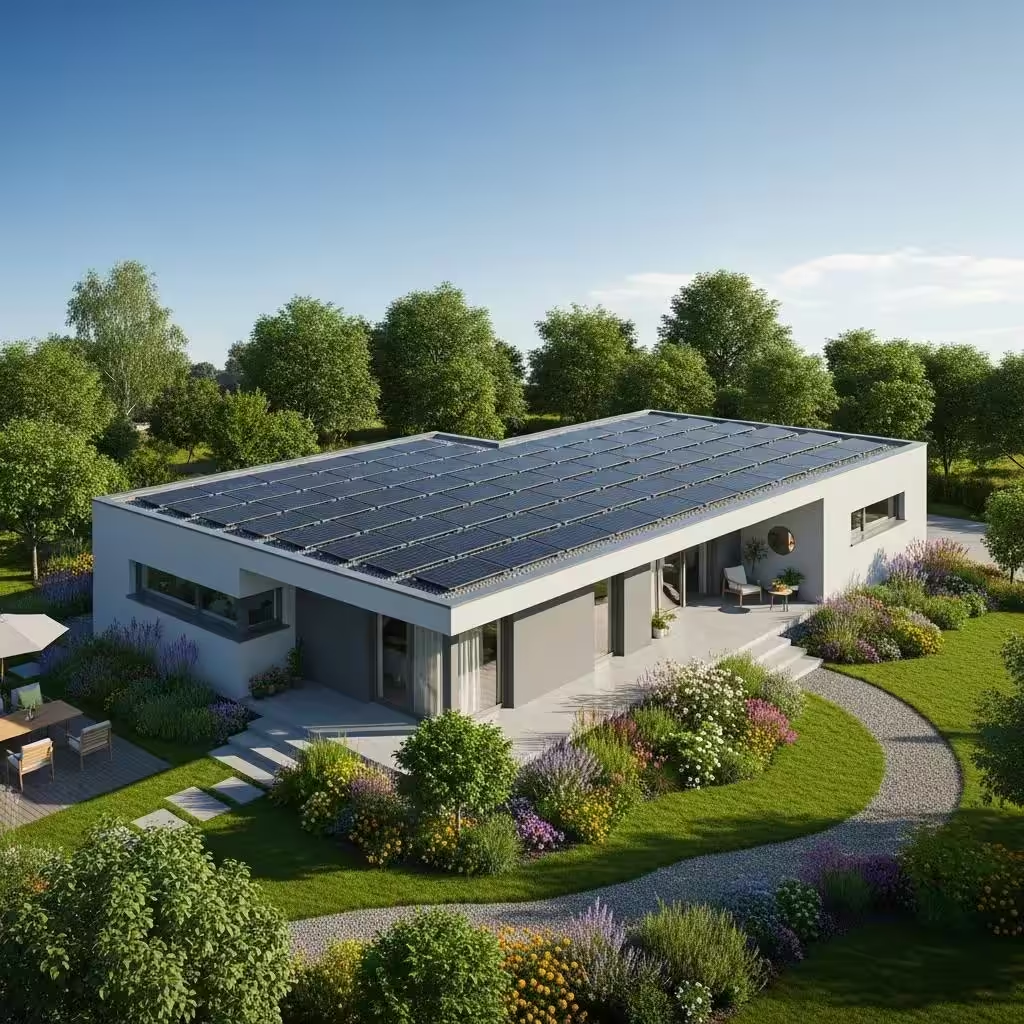
Integrating solar panels with roofing solutions can lead to significant energy cost reductions. Homeowners can expect lower utility bills as they generate their own electricity, which can also increase the marketability of their homes. Properties equipped with solar energy systems are often viewed as more desirable, leading to higher resale values.
Long-Term Financial and Environmental Advantages of PACE Programs
The long-term benefits of PACE financing extend beyond immediate cost savings. Homeowners can enjoy reduced carbon footprints and contribute to environmental sustainability. Additionally, the financial structure of PACE loans allows for predictable payments, making budgeting easier and providing peace of mind.
How Does PACE Financing Impact Solar Installation Costs and Savings?
Understanding the financial implications of PACE financing is crucial for homeowners considering solar installations.
Cost Analysis Comparing PACE Loans to Traditional Financing Options
When comparing PACE loans to traditional financing options, PACE financing often proves to be more advantageous. Traditional loans may require substantial upfront payments and higher interest rates, while PACE financing allows homeowners to finance the entire project cost, with repayment through property taxes which may offer competitive interest rates.
Statistical Insights on Energy Savings and Home Resale Value Improvements
Research indicates that homes with solar installations can see an increase in resale value by approximately 4% to 6%. Additionally, homeowners can save thousands on energy bills over the lifespan of their solar systems, making PACE financing a financially sound investment.
Further supporting the efficacy of PACE, studies have shown a direct correlation between these programs and a significant boost in residential solar photovoltaic system installations.
Residential PACE Programs Boost Solar PV Deployment
A new study by Berkeley Lab found that residential Property Assessed Clean Energy (R-PACE) programs increased deployment of residential solar photovoltaic (PV) systems in California, raising it by about 7-12% in cities that adopt these programs. R-PACE is a financing mechanism that uses a voluntary property tax assessment, paid off over time, to facilitate energy improvements and, in some jurisdictions, water and resilience measures.
… the PACE of California residential solar deployment: Impacts of Property Assessed Clean Energy programs on residential solar photovoltaic deployment in California …, J Deason, 2018
Where Can Homeowners Find Support and Resources for PACE Financing?
Homeowners interested in PACE financing can access various resources and support systems to guide them through the process.
Sunfinity Power’s Expert Consultation and Personalized Quote Services
Sunfinity Power offers expert consultation services to help homeowners navigate the PACE financing process. Their team provides personalized quotes and detailed information on solar panel installations and roofing solutions, ensuring homeowners make informed decisions.
Additional Resources: State Programs, Case Studies, and Customer Testimonials
Homeowners can also explore state programs, case studies, and customer testimonials to gain insights into the benefits of PACE financing. These resources can provide valuable information on successful projects and the positive impact of solar energy on communities in Rhode Island and Connecticut.