

How Your Massachusetts Home Battery Earns Money in VPPs
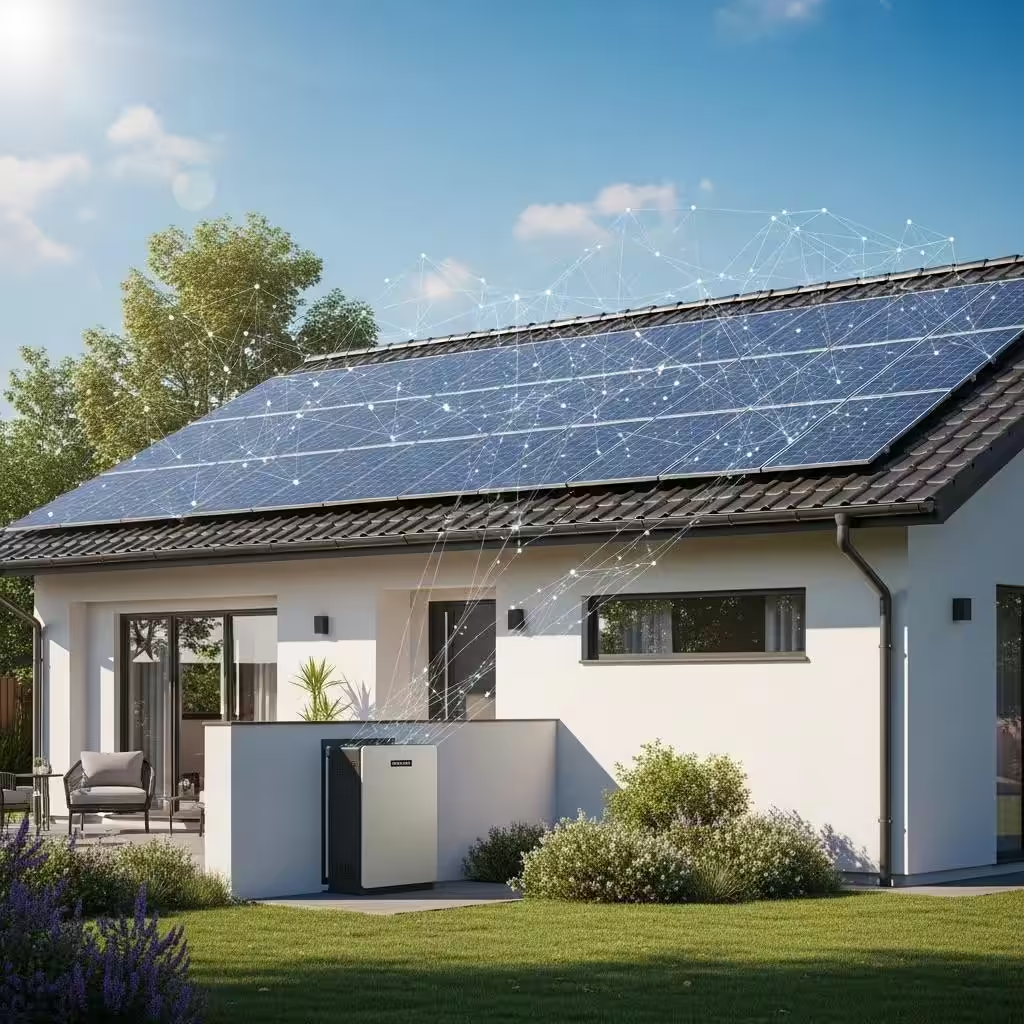
Earn Money & Solar Savings with Home Batteries in Massachusetts VPPs
Ever thought your home battery Massachusetts system could do more than just provide backup power? Here’s something exciting: a virtual power plant Massachusetts connects distributed energy resources, like your home battery, to offer coordinated services to the grid. This means homeowners like you can earn money and significantly boost the value of your rooftop solar!
This article will guide Massachusetts homeowners with battery storage on how to join programs like the ConnectedSolutions program. We’ll explore how these programs dispatch and pay for aggregated capacity, and the practical steps you need to take to qualify and maximize your earnings. With many Massachusetts households facing rising peak charges and annoying intermittent outages, participating in a virtual power plant Massachusetts transforms your battery from a standby device into a revenue-generating asset, all while making our local grid more reliable.
You’ll learn what a VPP is, the grid services your battery can provide, typical ConnectedSolutions eligibility and payout ranges, which batteries are best for enrollment, how pairing solar with storage supercharges your savings, and where to find practical support from local installers. After defining the core concepts, we’ll walk you through enrollment, battery selection, understanding incentives, and how an installer can be your best ally in capturing payments and keeping your backup power safe.
Further research consistently highlights the financial benefits and battery storage revenue streams home battery systems can unlock for Massachusetts residents.
Massachusetts Residential PV-Battery Revenue Analysis
This analysis focuses on the use of PV-battery systems within Massachusetts from 2020- that the battery adds an additional source of costs and revenues. Additional revenues come
Let the Sun do the Work: Analyzing the Economic and Environmental Performance of Residential PV-battery systems in Massachusetts, 2020
What Is a Virtual Power Plant and How Does It Work in Massachusetts?
So, what exactly is a virtual power plant Massachusetts? Imagine it as a super-smart, coordinated system that links many smaller energy resources—like your home battery, smart inverters, and even demand response programs—to act as one big, flexible resource for the grid. VPPs work by gathering these small resources and using an energy management system (EMS) and communication to tell them when to discharge power. This usually happens during peak demand, frequency events, or capacity auctions, aiming to reduce stress on our local generation and transmission assets.
For us in Massachusetts, VPPs are a huge help to utilities like Eversource Energy and National Grid Massachusetts. They manage scorching summer peaks and short-duration reliability needs without always firing up expensive peaker plants. Plus, they create excellent payment opportunities for participating homeowners who can offer usable discharge capacity. The quick rundown below clarifies how it all fits together, then we’ll dive into the technical details for homeowners.
VPPs operate through a few straightforward steps:
- Resource Registration: Your battery and inverter register with an aggregator and connect via an EMS or gateway.
- Forecasting & Scheduling: The aggregator predicts events and schedules dispatch windows, always preserving your home’s backup needs.
- Event Dispatch: When an event occurs, the aggregator sends dispatch signals, and your EMS responds by discharging power at a specified kilowatt (kW) rate.
- Performance Settlement: Utilities or program operators measure the kW you delivered and pay participating resources based on their performance.
These steps outline the basic VPP operations and set the stage for how your home battery can technically participate.
How Do Home Batteries Participate in Virtual Power Plants?
Your home battery participates by providing measurable, dispatchable kilowatts through a certified communication and control pathway, typically an EMS or a cloud-based gateway accessible by the aggregator during events. For your battery to join, it needs to report its state-of-charge, accept remote dispatch commands, and meet minimum response times and duration targets. This ensures reliable power delivery when the grid calls for it.
For homeowners, this means having compatible hardware (battery, inverter, EMS), stable internet, and completed enrollment paperwork. The aggregator then handles scheduling to protect your warranty and backup availability. Participation is usually occupant-friendly: batteries charge from solar or the grid and only discharge during program events, always preserving a reserve for outages unless you’ve configured it otherwise. Understanding this technical flow highlights the importance of compatibility and telemetry, leading us to the specific grid services VPPs provide.
What Grid Services Do VPPs Provide to Massachusetts Utilities?
VPPs offer a suite of grid services that utilities truly value, as they reduce the need for expensive peaker generation and boost short-term system stability. These include peak demand reduction (capacity), frequency response (a super-fast, short-duration response to stabilize system frequency), reserve energy (standby capacity ready to discharge), and even congestion relief in specific local circuits.
These services help utilities reduce exposure to wholesale market price swings, lower emissions by avoiding high-emission peaker plant runs, and can even decrease the risk of localized outages. It’s a win-win for both utilities and participating homeowners, even if indirectly. For Massachusetts homeowners, providing these services through aggregated batteries turns stored energy into measurable grid value, forming the foundation for program payments we’ll quantify in the ConnectedSolutions section.
Optimizing these grid support services involves careful consideration of market prices and the long-term impact on battery health.
VPP Grid Services & Market Price Optimization
to enable the optimal grid support service commitment of a virtual power plant (VPP), market prices for the different grid support services, together with battery ageing costs.
Optimal virtual power plant management for multiple grid support services, A Bolzoni, 2020
How Massachusetts VPP Programs Work: National Grid & Eversource
The ConnectedSolutions program is a fantastic demand response and distributed capacity program that brings together enrolled residential batteries, paying participants for delivering dispatchable kilowatts during events. Offered through participating Massachusetts utilities and program administrators like Eversource Energy and National Grid Massachusetts, the program typically runs seasonal events during system peaks. You get paid based on your measured performance—the kW you delivered during events and your participation frequency—creating a clear pay-for-performance incentive for reliable power discharge.
Your payments depend on your contracted capacity, event frequency, and actual kW delivered, so annual earnings vary with battery size, number of events, and system efficiency. To give you a realistic idea, a smaller 5 kWh battery might earn $300-$800 annually, while a medium 10 kWh system could see $700-$1,500. A larger 13.5 kWh battery could bring in $1,200-$2,500 or more each year! These figures are based on recent program behavior and typical event profiles in 2024. Remember, actual payments depend on your specific utility, event numbers, and measured dispatch performance. Installers or aggregators often help with system registration and telemetry verification to ensure accurate measurement and maximize payouts.
The ConnectedSolutions program is a key mechanism for homeowners to participate in these energy initiatives and receive incentives.
ConnectedSolutions Program & Battery Incentives
owners may enroll in the ConnectedSolutions program while programs, we assumed perfect battery performance and a services. This is especially critical to provide access for income-.
Energy Storage Incentive Rate Setting for States, 2024
For homeowners seeking help with battery selection, system configuration, or enrollment paperwork, local solar and storage installers can truly streamline the process. They advise on sizing and EMS settings to perfectly balance backup needs with program participation.
Ready to See Your Battery Earn?
Curious about how much your home battery Massachusetts could earn through ConnectedSolutions? Let Sunfinity Power help you get a personalized earnings estimate and guide you through the enrollment process!
Tesla Powerwall and Enphase IQ Battery in Massachusetts VPPs
Is Tesla Powerwall Compatible with Massachusetts VPP Programs?
Absolutely! The Tesla Powerwall is widely compatible with many aggregator and program setups when provisioned correctly. Its generous usable capacity and integrated inverter/EMS make it a common choice for residential VPP participation in Massachusetts. Homeowners should confirm their Powerwall firmware and gateway settings support remote dispatch and that their chosen aggregator accepts Tesla systems. Sometimes, programs might require extra provisioning steps or software integrations. Tesla’s high usable kWh and efficiency make it effective for both backup and dispatch, but a quick verification with your aggregator can prevent surprises during enrollment. Confirming compatibility and provisioning early prevents delays and ensures proper system measurement during dispatch events.
What Other Battery Brands Qualify for ConnectedSolutions in MA?
You bet! Several other brands commonly qualify, depending on their inverter/EMS compatibility and the aggregator’s certification list. Brands like Enphase IQ Battery, Fortress Power, and other AC- and DC-coupled systems frequently participate when their telemetry and control meet program requirements. Differences in round-trip efficiency, inverter integration, and firmware update policies can all influence actual performance during events, affecting your earnings. When looking at alternatives, focus on the communication stack and whether the device supports standard telemetry protocols. These practical checks often determine qualification more than just raw kWh numbers. Here’s a quick checklist of qualification factors:
- Battery Capacity: Ensure usable kWh matches expected dispatch needs.
- Communication: Confirm your gateway/EMS supports remote dispatch and reporting.
- Warranty & Cycling: Review warranty language to ensure it covers frequent dispatch scenarios.
- Inverter Integration: Verify your inverter and EMS can communicate with aggregators.
How Does the ConnectedSolutions Program Enable Massachusetts Homeowners to Earn Money?
The ConnectedSolutions program is a fantastic demand response and distributed capacity program that brings together enrolled residential batteries, paying participants for delivering dispatchable kilowatts during events. Offered through participating Massachusetts utilities and program administrators like Eversource Energy and National Grid Massachusetts, the program typically runs seasonal events during system peaks. You get paid based on your measured performance—the kW you delivered during events and your participation frequency—creating a clear pay-for-performance incentive for reliable power discharge.
Your payments depend on your contracted capacity, event frequency, and actual kW delivered, so annual earnings vary with battery size, number of events, and system efficiency. To give you a realistic idea, a smaller 5 kWh battery might earn $300-$800 annually, while a medium 10 kWh system could see $700-$1,500. A larger 13.5 kWh battery could bring in $1,200-$2,500 or more each year! These figures are based on recent program behavior and typical event profiles in 2024. Remember, actual payments depend on your specific utility, event numbers, and measured dispatch performance. Installers or aggregators often help with system registration and telemetry verification to ensure accurate measurement and maximize payouts.
The ConnectedSolutions program is a key mechanism for homeowners to participate in these energy initiatives and receive incentives.
ConnectedSolutions Program & Battery Incentives
owners may enroll in the ConnectedSolutions program while programs, we assumed perfect battery performance and a services. This is especially critical to provide access for income-.
Energy Storage Incentive Rate Setting for States, 2024
For homeowners seeking help with battery selection, system configuration, or enrollment paperwork, local solar and storage installers can truly streamline the process. They advise on sizing and EMS settings to perfectly balance backup needs with program participation.
Ready to See Your Battery Earn?
Curious about how much your Massachusetts home battery could earn through ConnectedSolutions? Let Sunfinity Power help you get a personalized earnings estimate and guide you through the enrollment process!
What Are the Eligibility Requirements for ConnectedSolutions in Massachusetts?
So, what does it take to be eligible? Generally, you’ll need to be in the service territory of a participating utility (like Eversource Energy or National Grid Massachusetts), own or control a battery system that meets the program’s interoperability and telemetry standards, and maintain internet connectivity for remote dispatch and reporting. Utilities often require specific inverter/EMS compatibility and might set minimum response and duration criteria, so homeowners should confirm device firmware and communication modules before enrolling. Paperwork usually includes verifying your utility account and providing system specifications. Aggregators might even do a quick site validation to confirm reliable telemetry reporting. Understanding these prerequisites makes it much easier to prepare for enrollment and ensures your battery will be accepted and measured accurately.
How Much Can Your Home Battery Earn Through ConnectedSolutions?
Your earnings are truly driven by your contracted kW capacity, event frequency, and how closely your actual delivery matches the scheduled discharge. Typical published ranges for residential participation in recent program cycles show averages from roughly $700 to $1,500 annually for medium-sized systems. Larger or better-performing systems can even hit $2,000 or more in more active years!
Why the variability? Utilities call different numbers of events each season, and performance penalties or bonuses can apply depending on measurement windows and telemetry quality. To give you a clearer picture, imagine three scenarios: a conservative year with few events and modest performance, a typical year with expected events and on-target delivery, and an optimistic year with many events and super-high dispatch performance. These scenarios help homeowners estimate probable cash flows and make smart trade-offs between sizing their battery for backup versus maximizing VPP participation.
Which Home Batteries Are Best Suited for Virtual Power Plants in Massachusetts?
When picking a battery perfect for VPP participation, look for reliable round-trip efficiency, certified communications for remote dispatch, warranty terms that cover regular dispatch cycles, and enough usable capacity to deliver your contracted kW without compromising backup needs. Different brands and models excel in different areas, but compatibility with aggregators and your inverter/EMS ecosystem is often the biggest hurdle. Installers delve into these technical merits and how a battery’s management logic integrates with program dispatch signals.
For instance, the Tesla Powerwall is a popular choice with high VPP compatibility, offering about 13.5 kWh usable capacity and around 90% round-trip efficiency. It’s commonly enrolled, though it might need specific provisioning. Enphase IQ Battery has medium compatibility but integrates well with the Enphase EMS, typically offering 3–12 kWh and about 88% efficiency. Fortress Residential batteries offer medium-high compatibility, with flexible configurations from 8–16 kWh and 85–90% efficiency, but verify the telemetry module. For Generic AC-coupled systems, compatibility varies widely (5–15 kWh, 80–90% efficiency), depending on the specific inverter/EMS gateway. So, while numbers are important, the communication stack and integration often determine qualification.
Is Tesla Powerwall Compatible with Massachusetts VPP Programs?
Absolutely! The Tesla Powerwall is widely compatible with many aggregator and program setups when provisioned correctly. Its generous usable capacity and integrated inverter/EMS make it a common choice for residential VPP participation in Massachusetts. Homeowners should confirm their Powerwall firmware and gateway settings support remote dispatch and that their chosen aggregator accepts Tesla systems. Sometimes, programs might require extra provisioning steps or software integrations. Tesla’s high usable kWh and efficiency make it effective for both backup and dispatch, but a quick verification with your aggregator can prevent surprises during enrollment. Confirming compatibility and provisioning early prevents delays and ensures proper system measurement during dispatch events.
What Other Battery Brands Qualify for ConnectedSolutions in MA?
You bet! Several other brands commonly qualify, depending on their inverter/EMS compatibility and the aggregator’s certification list. Brands like Enphase, Fortress Power, and other AC- and DC-coupled systems frequently participate when their telemetry and control meet program requirements. Differences in round-trip efficiency, inverter integration, and firmware update policies can all influence actual performance during events, affecting your earnings. When looking at alternatives, focus on the communication stack and whether the device supports standard telemetry protocols. These practical checks often determine qualification more than just raw kWh numbers. Here’s a quick checklist of qualification factors:
- Battery Capacity: Ensure usable kWh matches expected dispatch needs.
- Communication: Confirm your gateway/EMS supports remote dispatch and reporting.
- Warranty & Cycling: Review warranty language to ensure it covers frequent dispatch scenarios.
- Inverter Integration: Verify your inverter and EMS can communicate with aggregators.
What Are the Benefits of Combining Solar Panels with Battery Storage in Massachusetts?
Combining solar panels with battery storage truly amplifies your homeowner value! It boosts your self-consumption of on-site generation, lets you time-shift your solar output to expensive peak periods, and, of course, preserves backup power during outages. Plus, it qualifies you for VPP participation, allowing you to monetize stored energy.
Solar-plus-storage helps you reduce net grid purchases during high-rate times, supports home resilience by enabling “islanding” during outages (power stays on even if the grid goes down!), and generally improves your solar array’s economics by capturing more generation value on-site. For example:
- Peak Shaving: Your battery discharges during peak hours, leading to lower utility bills and peak charges.
- Backup Power: Your home can island during outages for increased resilience and continuous power for essentials.
- Increased Self-Consumption: Store midday solar for evening use, getting higher value from your solar generation and reducing export losses.
- Program Participation: Use your stored kW in VPPs, bringing in additional annual revenue from dispatch payments.
On top of all that, state and federal incentives—like the Federal Investment Tax Credit and local financing programs—can further improve your payback and make these combined systems even more affordable for Massachusetts homeowners. For more details on incentives, check out our Massachusetts solar incentives guide.
How Does Solar Plus Storage Increase Energy Independence and Backup Power?
Solar plus storage truly ramps up your energy independence by letting you use your on-site solar generation during evening peaks and keeping critical loads running when the grid is down through intentional islanding. Batteries configured for backup can detect outages and automatically switch to support your loads. In everyday operation, your system can prioritize charging from excess solar and then discharging during high-rate periods to slash your bills. For instance, instead of exporting midday solar back to the grid, you can store that energy and use it during evening peaks, avoiding expensive grid purchases and even reducing demand charges for some rate structures. Understanding these operational modes helps homeowners design systems that perfectly balance backup reserve with participation in programs like ConnectedSolutions.
What Federal and State Incentives Support Solar Battery Installation in MA?
Good news! Federal incentives, like the Investment Tax Credit (ITC), currently allow homeowners to claim 30% of qualified solar-plus-storage costs when systems meet eligibility rules. And here in Massachusetts, we have state-specific financing and incentive programs that can improve upfront affordability or offer low-cost financing options. Programs like Mass Save and other state or utility initiatives might provide rebates, financing, or consultation services that reduce your net installed cost or help find additional savings. It’s always wise for homeowners to verify current program rules and eligibility when planning a project. Combining federal and state incentives with third-party financing or even $0-down pathways can make storage accessible to more households, all while preserving the potential for those sweet VPP earnings. Checking current program terms and stacking opportunities is a practical next step before purchasing your system or enrolling. Learn more about solar and storage installation options at Sunfinity Power’s solar + storage installation.
Unlock Your Home's Full Potential!
Ready to combine solar and battery storage for maximum savings and independence? Sunfinity Power is your local Massachusetts expert, ready to guide you every step of the way.
How Does Sunfinity Power Support Massachusetts Homeowners in Installing Batteries and Joining VPPs?
Here at Sunfinity Power, we’re more than just a local solar and roofing installer; we’re your go-to information hub that helps Massachusetts homeowners like you evaluate solar-plus-storage options and confidently navigate enrollment in aggregation programs. We’re proud to offer in-house teams that manage the entire installation process, from energy strategy customization to finding the perfect financing options, including $0-down pathways and even qualifying no-cost roof replacement when applicable. This truly simplifies the whole upgrade process for homeowners considering batteries. Our role is all about advising and executing: we’ll assess your site, recommend battery options perfectly compatible with the programs, and then support you with all the paperwork and telemetry setup needed for program enrollment. We’ve helped dozens of MA homeowners turn their homes into energy powerhouses, and we’d love to help you too!
What Is Sunfinity Power’s Process for Solar Battery Installation and VPP Enrollment?
Our process at Sunfinity Power typically kicks off with a friendly discovery call and a savings analysis to figure out if solar-plus-storage makes perfect sense for your home. After that, we’ll do a site survey to check your roof condition and any system design constraints. Once we propose a customized system you love, our in-house team takes over, coordinating all the permitting, installation, and commissioning. And here’s where we really shine: we then assist with system registration and telemetry setup for VPP enrollment where it applies. Timelines vary depending on project size and permitting, but you can always expect coordinated scheduling and a single point of contact throughout the installation and enrollment phases, which really cuts down on any friction. This step-by-step approach shows how a professional installer like us manages all technical and administrative tasks, supporting reliable program participation and performance for you.
How Does Sunfinity Power Help Maximize Your Earnings from ConnectedSolutions?
We don’t just install; we help you maximize those earnings! Sunfinity Power helps you get the most out of ConnectedSolutions by right-sizing your battery capacity to match likely dispatch profiles, configuring your EMS and charging strategies to preserve usable capacity during events, and ensuring all your telemetry and documentation meet aggregator requirements for accurate performance measurement. Our in-house teams are experts at optimizing system settings—things like your reserve state-of-charge and dispatch thresholds—to perfectly balance your backup needs with program participation. This significantly reduces the risk of disqualification or measurement errors that could cut into your payouts. We also offer ongoing monitoring and periodic performance checks to make sure your system continues to deliver the expected kW during events. And if any firmware or configuration updates are needed to maintain compatibility, we’ll coordinate those too. These practical services let you focus on enjoying your system and its benefits, while we handle the enrollment, technical optimization, and measurement support.
Schedule Your Free Consultation Today!
Ready to explore how a home battery can benefit you? Contact Sunfinity Power for a no-obligation consultation.
Partner with Sunfinity Power Today!
Ready to make your Massachusetts home battery a revenue-generating asset? Let Sunfinity Power be your trusted partner for installation, optimization, and VPP enrollment. We’re here to help you every step of the way!
What Are the Most Common Questions About Virtual Power Plants and Home Batteries in Massachusetts?
You might have a few questions, and that’s totally normal! Homeowners frequently ask how to enroll, which utilities participate, and how participation affects backup reliability and warranty life. We have direct answers to simplify your next steps and clarify your installer’s responsibilities. The Q&A below tackles enrollment mechanics, typical timelines, and where to begin when joining VPP programs while keeping that crucial backup power. Clear, actionable answers help you move from curiosity to enrollment and making informed choices about battery sizing and configuration.
Here are some common practical steps and considerations:
- How do I enroll my battery? It’s pretty straightforward! Contact your utility (like Eversource Energy or National Grid Massachusetts) or an authorized aggregator, verify your system’s compatibility and telemetry, and then submit the enrollment paperwork. Often, your installer will submit all technical documentation on your behalf, making it super easy.
- Will participation affect my backup power? This is a great question! Aggregators and installers are careful to configure a reserve state-of-charge to preserve a defined backup level. Plus, you, the homeowner, can usually set your own preferences to balance earnings with your reliability needs.
- What documentation is needed? Typically, you’ll need account verification, your system’s specifications, and confirmation of your telemetry. Don’t worry, installers usually prepare and submit all technical evidence to speed up your acceptance.
How Do I Enroll My Home Battery in the ConnectedSolutions Program?
To enroll, first, confirm your utility participates (most major MA utilities like Eversource Energy, National Grid Massachusetts, and Unitil do!). Then, verify your battery and EMS meet the program’s interoperability and telemetry requirements. Finally, complete the aggregator or utility enrollment process—and remember, your installer can often give you a huge hand with this, providing all technical files and telemetry proof. Installers typically handle the technical test, gateway provisioning, and telemetry verification, so you don’t have to worry about managing firmware or protocol details. Enrollment timelines include verification windows and possible site visits, so anticipating these steps can really streamline your acceptance and reduce the chance of delayed payments. With an installer preparing your documentation and testing your telemetry, you can focus on setting your backup preferences and understanding your expected earnings.
Which Utilities Participate in Massachusetts VPP Programs?
You’ll be happy to know that participating utilities commonly include the major Massachusetts service providers where ConnectedSolutions and similar programs operate. We’re talking about big names like Eversource Energy, National Grid Massachusetts, and Unitil. Just keep in mind that participation details—like event schedules and enrollment pages—can vary a bit by utility and territory. So, homeowners should always check program eligibility with their specific utility account and ask aggregators about any utility-specific nuances. Why? Because event timing and measurement windows can differ, and that can affect the shape of your payments and how your system is configured. Installers and aggregators are your best resource; they can confirm participation status and guide you through those utility-specific enrollment processes to ensure accurate measurement and timely payments.
Conclusion: Unlock Your Home Battery Massachusetts Potential with Virtual Power Plant Massachusetts Programs
Participating in a virtual power plant Massachusetts program like ConnectedSolutions offers a unique opportunity for homeowners to turn their home battery into a valuable asset that generates income while supporting grid reliability during peak demand events. Whether you have a Tesla Powerwall, Enphase IQ Battery, or another compatible system, Massachusetts residents can benefit from battery storage revenue streams, state and federal incentives, and the expertise of local installers.
Sunfinity Power is your trusted partner in navigating the complexities of virtual power plant Massachusetts enrollment, battery selection, and system optimization. We help you maximize your earnings, maintain backup power reliability, and take full advantage of programs offered by National Grid Massachusetts, Eversource Energy, and other utilities. Ready to start earning with your home battery Massachusetts? Contact Sunfinity Power today to schedule your free consultation and unlock the full potential of your solar-plus-storage system.