
Are There Upfront Costs for Solar Panels in RI? Breaking Down the Expenses
If you’re wondering how much solar panels cost in Rhode Island, the short answer for 2026 is roughly $8,500–$26,000 installed depending on system size, before state incentives. But the real cost depends on your roof, your usage, and which incentives you qualify for. This guide breaks down the true upfront cost of solar panels for RI homeowners — every component, every financing path, and the Rhode Island programs that lower your out-of-pocket price.
Understanding Initial Solar Panel Expenses in Rhode Island
The cost of a solar panel system in Rhode Island is more than the panels themselves. Your total includes equipment (panels, inverters, racking), installation labor, permitting and inspection fees, and any electrical-panel work your home needs. System size and equipment quality are the biggest levers — a whole-home system costs more than a small one, and premium monocrystalline panels with microinverters cost more than basic hardware. The good news: Rhode Island’s Renewable Energy Fund grants, Renewable Energy Growth tariff, and net metering can meaningfully cut the net price below the sticker number.
Typical Components of Solar Panel Installation Costs in RI
Solar installation costs in Rhode Island are made up of several key components: solar installation services.
- Equipment Costs: Includes solar panels, inverters, racking systems, wiring, and mounting hardware. Higher efficiency panels (typically monocrystalline) usually cost more.
- Installation and Labor Costs: Covers the professional fees for mounting the panels and connecting them to your home’s electrical system. Skilled installers ensure optimal performance and compliance with regulations.
- Permitting and Inspection Fees: Required by local governments to meet safety and building codes. Although these fees vary by municipality, they remain an essential part of the overall cost.
- Additional Electrical Work: May include upgrading wiring, circuit breakers, or even specific disconnect systems if the home’s current electrical setup is inadequate.
- Warranty and Performance Guarantees: Some packages include extended warranties and maintenance plans, which can be factored into the upfront expenses.
A detailed cost breakdown helps determine where savings may be achieved through or efficient financing options.
How System Size Impacts Your Initial Investment
System size is the single biggest cost factor. Solar is priced in kilowatts (kW), and most Rhode Island homes land between 6 kW and 11 kW. As a 2026 rule of thumb, expect roughly $2.50–$3.50 per watt installed before incentives — so an 8 kW system runs about $20,000–$28,000 before RI’s Renewable Energy Fund grant and net-metering value are applied. Larger systems cost more in total but often a little less per watt, and they leave headroom for an EV charger or heat pump. A quick review of your last 12 months of Rhode Island Energy bills is the right way to size it.
The Role of Equipment Quality in Upfront Solar Pricing
Equipment quality directly affects both price and long-term return. Premium monocrystalline panels reach 20–22%+ efficiency and carry 25-year product and performance warranties, while value-tier hardware costs less up front but produces less and degrades faster. For New England roofs — limited space, winter sun angles, occasional shading — higher-efficiency panels paired with microinverters (Enphase) or optimizers (SolarEdge) usually deliver the better lifetime value, even at a higher initial cost.
Permitting and Inspection Fees Contribution to Initial Costs in RI
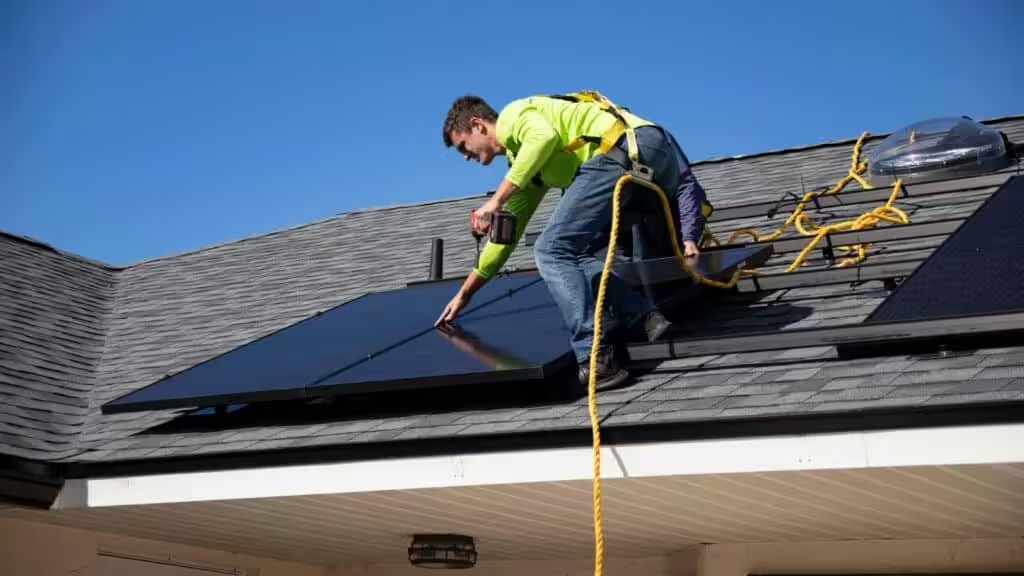
Permitting and inspection are required, municipality-administered costs that confirm your install meets electrical, structural, and fire-code requirements. In Rhode Island these typically total a few hundred dollars and are usually bundled into your installer’s quote. They’re a small slice of the total, but they’re non-negotiable for a legal, safe, net-metering-eligible system — a reputable RI installer handles all of it for you.
Are There Any Upfront Costs Associated With Solar Panel Installation in RI for Different System Types
The upfront costs for solar installation in Rhode Island vary with the system type chosen. Here are the main system types:
Comparing Initial Outlays for Rooftop Solar Systems
Rooftop systems are the most common and usually cost less because they use the existing roof structure for mounting. However, factors like roof condition, orientation, and shading must be evaluated. Additional expenses may arise if the roof requires repairs or reinforcements prior to roof replacement services.
Examining Upfront Expenses for Ground-Mounted Solar Arrays
Ground-mounted systems require a dedicated support structure on the ground, often leading to higher installation costs due to extra labor and materials. Their advantages include easier maintenance access and optimal orientation flexibility, which may improve overall efficiency.
Cost Considerations for Solar Shingle Installations
Solar shingles integrate photovoltaic cells directly into roofing materials for a sleek, blended appearance. However, the installation is more labor-intensive and the technology can command a higher price premium due to its specialized nature.
Initial Financial Commitments for Off-Grid Solar Systems
Off-grid systems, requiring batteries, charge controllers, and inverters for energy storage, bear significantly higher upfront costs. They are typically used in remote locations where grid connection is not available or desired. These systems provide complete energy independence but come with a steeper initial price tag. .
Securing Solar Loans for Your Rhode Island Installation
Financing is crucial in making solar more accessible. Solar loans allow homeowners to cover high upfront costs by repaying the expense over time with favorable interest rates and terms. These loans are offered by renewable energy finance companies and traditional banks alike. With monthly savings on utility bills potentially shortening the payback period, solar loans provide an immediate benefit while spreading the cost over several years.
Understanding Solar Lease Agreements and Initial Payments
Solar lease agreements offer another financing option where a provider owns the system, and the homeowner pays a fixed monthly fee for the generated power. Typically, this arrangement requires little to no initial cost. Although leasing does not provide ownership or tax credit benefits, it offers predictable payments and maintenance is handled by the provider. This model is particularly attractive for homeowners who wish to avoid the large upfront investment.
Power Purchase Agreements (PPAs) and Their Upfront Cost Implications in RI
Under a Power Purchase Agreement (PPA), the solar provider installs and maintains the system while the homeowner buys the generated power at a predetermined, typically lower rate than the utility’s pricing. PPAs usually involve no upfront cost, allowing immediate utility bill reductions. The provider assumes the performance and maintenance risks, making this an attractive option in Rhode Island’s supportive regulatory environment.
Home Equity Loans or HELOCs for Solar Investment
For homeowners preferring full ownership of their solar systems, home equity loans or lines of credit (HELOCs) serve as effective financing methods. These options usually offer lower interest rates than unsecured loans and provide potential tax benefits. However, they require an appraisal process and careful consideration of long-term debt implications.
Rhode Island Incentives That Reduce Initial Solar Installation Expenses
Rhode Island offers some of the strongest solar incentives in the country, and they materially reduce your net cost:
State Tax Benefits
Important 2026 note on the federal credit: the federal Residential Clean Energy Credit (the 30% federal tax credit) expired for systems placed in service after December 31, 2025. Rhode Island does not offer a state income-tax credit for solar — instead, RI uses direct grants and performance payments (below), which lower your cost without waiting for a tax filing.
State Rebates
RI Renewable Energy Fund (REF) grant: Rhode Island’s Renewable Energy Fund offers a small-scale solar grant of roughly $0.65 per watt, capped near $5,000 per residential project, with an added incentive when you pair solar with battery storage. This is a direct rebate that comes off your project cost — not a deferred tax credit.
Local Utility Incentives
Renewable Energy Growth (REG) & net metering: through Rhode Island Energy, the REG performance tariff pays a fixed rate for the energy your system produces, while net metering credits you for excess power sent back to the grid and lets you size a system up to 125% of your annual usage. The verified 2026–2027 small-scale ceiling price runs about 31.55¢/kWh.
Renewable Energy Certificates (RECs)
Renewable Energy Certificates (RECs): your system’s clean-energy production can also earn certificates that may be sold for additional value, further lowering your effective net cost over time.
Together, these incentives make solar energy a more economically attractive option with a better overall .
Factors Influencing the Variation in Upfront Solar Costs Across Rhode Island
Several factors cause variation in upfront solar costs across Rhode Island solar incentives:
Roof Condition and Complexity
An older, complex, or damaged roof may require extra labor, custom mounting solutions, or repairs, which drive up costs. Homes with simple, well-maintained generally see lower installation fees.
Installer Reputation
Installer choice changes your real cost. A reputable Rhode Island installer with in-house crews may quote slightly higher than a low-bid subcontractor, but it protects you from the hidden costs that show up later — roof leaks from rushed penetrations, underproducing arrays, and warranty finger-pointing. Sunfinity Power installs solar and replaces roofs with its own New England crews, so you get one team, one timeline, and one warranty.
Additional Electrical Work
Older homes without modern electrical systems might need upgrades such as new wiring, breakers, or inverters, increasing overall costs.
Geographic Location
Urban areas typically have higher labor and material costs compared to rural regions. Differences in local permitting fees and municipal regulations can also cause cost variations.
Getting a Clear Picture of Your Potential Upfront Solar Panel Costs in RI
Before committing, get a detailed, itemized quote that breaks out equipment, labor, permits, and any electrical work — so you can compare RI installers on a true apples-to-apples basis with no hidden fees. Sunfinity’s free, no-pressure Solar Savings Report models your actual Rhode Island Energy usage against REG, REF, and net metering, so you see real numbers before you decide.
Frequently Asked Questions
Q: What determines the cost of solar panels in Rhode Island?
A: System size (kW), equipment quality, your roof’s condition, and any electrical-panel upgrades — typically $2.50–$3.50 per watt installed before incentives.
Q: What Rhode Island incentives reduce the upfront cost?
A: The RI Renewable Energy Fund grant (~$0.65/W, capped near $5,000), the Renewable Energy Growth performance tariff, and net metering through Rhode Island Energy. Note: the federal tax credit expired for systems placed in service after 12/31/2025.
Q: How does roof condition affect the price of solar installation?A: Poor or complex roof conditions may require extra labor, custom mounting solutions, or repairs, driving up costs, whereas generally leads to lower expenses.
Q: What financing options are available if I cannot pay the full installation cost upfront?A: Options include solar loans, leases, Power Purchase Agreements (PPAs), and home equity financing such as HELOCs. For more information, visit solar installation services.
Q: Are there any differences in upfront costs between rooftop and ground-mounted systems?A: Typically, rooftop systems are less expensive because they use existing structures, while ground-mounted systems require additional support structures, though they might offer easier maintenance and optimal orientation.
Q: How long until solar pays for itself in Rhode Island?
A: With RI’s incentives and high electricity rates, payback periods typically run about 6–10 years, after which the energy is essentially free for the remaining 15+ years of the system’s life.
Q: Do increased equipment quality or higher upfront spending guarantee better performance?A: Generally, higher-quality equipment yields better efficiency, longer warranties, and lower maintenance costs; however, overall performance depends on system design and installation quality.
| Component | Estimated Cost Range | Key Considerations | Benefit |
|---|---|---|---|
| Equipment (Panels, Inverters) | $5,000 – $15,000 | Efficiency, durability, technology type | High energy output, long-term reliability |
| Installation and Labor | $2,000 – $6,000 | Labor quality, roof complexity | Secure and proper system mounting |
| Permitting and Inspection | $500 – $2,000 | Local government fees, inspection requirements | Compliance with safety standards |
| Additional Electrical Work | $1,000 – $3,000 | Upgrading wiring, panels, breaker capacity | Smooth integration with existing systems |
| Total | $8,500 – $26,000 | Varies based on system size and quality | Comprehensive solar energy system |
Before finalizing your decision, review a detailed table like the one above to understand how each component contributes to your total upfront costs. This transparency helps you prepare for extra expenses and negotiate better financing terms.
A clear understanding of these costs, combined with the various financing options and state incentives available in Rhode Island, provides a roadmap to a more sustainable and economically beneficial solar investment. Homeowners should take advantage of detailed proposals and transparent pricing from reputable installers to capture all potential incentives and align the project timeline with their financial goals.
With Rhode Island’s Renewable Energy Fund grant, the REG tariff, and net metering working together, the real cost of going solar in RI is well below the sticker price — and a transparent, itemized proposal from a reputable local installer is how you capture every dollar of it.
Conclusion
Understanding the true cost of solar panels in Rhode Island puts you in control of a 25-year decision. Between RI’s grants, performance payments, and net metering — plus financing that can make it $0-down — going solar is more affordable than the upfront number suggests. The next step is a real, itemized quote based on your actual usage. Call Sunfinity Power at (401) 227-3363 or request a free Solar Savings Report to see your Rhode Island numbers.