
How Much Do Solar Panels Cost? Complete Pricing Guide
How Much Do Solar Panels Cost? Complete Pricing Guide
How much do solar panels cost? For New England homeowners in 2026, a residential solar system typically runs about $2.50–$3.50 per watt installed before incentives — roughly $18,000–$32,000 for a common 7–10 kW system. Your actual price depends on system size, equipment quality, your roof, and which state incentives you qualify for in Rhode Island, Massachusetts, or Connecticut. This guide breaks down what drives solar pricing and how to lower your real out-of-pocket cost.
What Constitutes the Average Cost of Solar Panels in New England?

The average cost of solar panels in New England generally falls between $18,000 and $32,000 for a typical 7–10 kW residential system before incentives — about $2.50–$3.50 per watt. Smaller 5–6 kW systems can start near $14,000, while larger 12 kW+ systems with battery storage can exceed $40,000. That figure covers panels, inverters, racking, labor, and permits. With strong state programs and high regional electricity rates, most New England homeowners reach payback in roughly 6–10 years.
What moves your number up or down comes down to a handful of clear factors:
The biggest cost levers are system size (more kilowatts, more cost), equipment tier (premium monocrystalline panels and microinverters cost more but produce more), roof condition (an aging roof may need replacement first), and your home’s electrical panel (older homes may need a 200-amp upgrade). New England’s labor and permitting costs also run higher than the national average.
Which Factors Influence Solar Panel Installation Cost?
Several key factors can significantly influence the cost of solar panel installation:
- System Size: Larger systems generally cost more but can provide greater energy savings.
- Roof Condition: A roof in poor condition may require repairs or replacement before installation, increasing overall costs.
- Local Fees: Permitting and inspection fees can vary by location, impacting the total installation cost.
These factors collectively determine the final price of a solar installation, making it essential for homeowners to evaluate their specific circumstances.
How Does Solar System Price Breakdown Enhance Transparency?
A detailed price breakdown of solar system costs enhances transparency for homeowners by clarifying what they are paying for. This breakdown typically includes:
- Equipment Costs: The price of solar panels, inverters, and mounting hardware.
- Labor Costs: Expenses associated with installation and any necessary electrical work.
- Permitting Fees: Costs related to obtaining the required permits for installation.
By understanding these components, homeowners can make more informed decisions and identify areas where they might save money.
How Does Roof Replacement Integrate with Solar Panel Installation Costs?
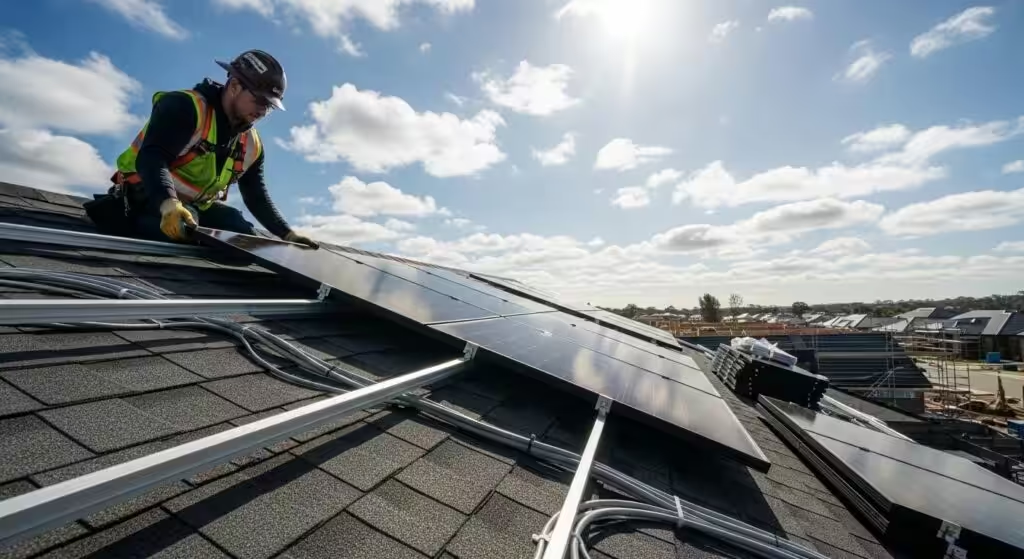
Integrating roof replacement with solar panel installation can lead to cost savings and streamlined project management. When a roof is replaced simultaneously with solar panel installation, homeowners can avoid the additional costs of removing and reinstalling solar panels later. This approach also allows for better project coordination, reducing the overall timeline and potential disruptions. Additionally, many solar companies offer incentives for homeowners who choose to combine these services, making it a financially attractive option.
Why Is Roof Condition Critical for Solar Installation?
The condition of a roof is critical for solar installation due to several reasons:
- Structural Integrity: A strong roof is essential to support the weight of solar panels.
- Material Compatibility: Certain roofing materials may not be suitable for solar panel installation, necessitating replacement.
- Cost Savings: Addressing roof issues before installation can prevent future costs associated with repairs or replacements.
Homeowners should assess their roof’s condition before proceeding with solar panel installation to ensure a successful and cost-effective project.
What Are the Costs and Benefits of Combined Roof Replacement and Solar Services?
Combining roof replacement with solar services can yield significant financial benefits for homeowners. The costs associated with this approach typically include:
When you combine the two, costs are additive but you save on shared labor and mobilization: a roof replacement (typically $8,000–$20,000 depending on size and material) plus the solar system (the $18,000–$32,000 range above) — done as one project rather than two, with one crew and one warranty.
The benefits of this combined approach include:
- Financial Savings: Homeowners can save on labor costs by having both services performed simultaneously.
- Increased Property Value: A new roof combined with solar panels can enhance the overall value of a home.
- Simplified Project Management: Coordinating both projects can reduce the overall timeline and complexity.
This strategic approach can lead to a more efficient and cost-effective transition to solar energy.
What Financing Options and Incentives Are Available for Solar Panels in Rhode Island, Massachusetts, and Connecticut?
Homeowners in Rhode Island, Massachusetts, and Connecticut have access to various financing options and incentives for solar panel installations. These include:
Homeowners in Rhode Island, Massachusetts, and Connecticut have strong state-level programs that lower the net cost:
- Rhode Island: Renewable Energy Fund grant (~$0.65/W, capped near $5,000), the Renewable Energy Growth tariff, and net metering through Rhode Island Energy.
- Massachusetts: the SMART program (per-kWh production incentive with storage adders) plus net metering.
- Connecticut: the Residential Renewable Energy Solutions (RRES) program through PURA.
Stacked with financing, these state programs make solar far more affordable than the sticker price suggests across all three states.
One important 2026 update on the federal side:
The federal Residential Clean Energy Credit — the 30% federal solar tax credit — expired for systems placed in service after December 31, 2025. It is no longer available for new 2026 installations. The state programs above (RI REF/REG, MA SMART, CT RRES) and net metering are now the primary incentives reducing solar costs in New England.
How Do Tax Credits and State Incentives Reduce Solar Investment?
With the federal credit no longer available for 2026 systems, state incentives do the heavy lifting on reducing your net investment. Rhode Island’s grant comes off your project cost directly; Massachusetts and Connecticut pay ongoing per-kWh value for what your system produces. Combined with net metering and high electricity rates, these programs still deliver a strong return — typically a 6–10 year payback, then 15+ years of largely free power.
Which Solar Panel Financing Options Best Suit Affluent Homeowners?
Affluent homeowners often seek financing options that align with their financial strategies. Some of the best-suited options include:
- $0-Down Solar Loan: install with no upfront cost and own the system, capturing the long-term savings and state incentives — the strongest long-term return for most owners.
- Cash Purchase: highest lifetime savings if you can fund it up front.
- Lease / PPA: little to no upfront cost and the provider maintains the system, but you don’t own it and savings are lower.
These financing options provide affluent homeowners with the flexibility to choose a solution that best fits their financial situation.
How Can Homeowners Calculate Solar Energy Savings and Return on Investment?
Homeowners can calculate their solar energy savings and return on investment (ROI) by considering several factors:
- Energy Consumption: Understanding current energy usage helps estimate potential savings.
- System Size: The size of the solar installation directly impacts energy production and savings.
- Incentives: Factoring in available tax credits and rebates can significantly affect ROI.
By using online calculators or consulting with solar professionals, homeowners can gain a clearer picture of their potential savings and ROI from solar energy investments.
What Is the Role of the Solar Savings Report in Personalized Analysis?
The Solar Savings Report is a valuable tool for homeowners considering solar energy. This report typically includes:
- Discovery Call: An initial consultation to assess energy needs and goals.
- On-Site Survey: A detailed evaluation of the property to determine the best solar solutions.
- Financial Projections: Estimates of potential savings, ROI, and payback periods based on the specific installation.
This personalized analysis helps homeowners understand the financial implications of solar energy and make informed decisions.
How Does Energy Savings Impact Long-Term Home Value?
Energy savings from solar installations can significantly impact long-term home value. Homes equipped with solar panels often see:
- Increased Appraised Value: Properties with solar energy systems are generally appraised higher due to their energy efficiency.
- Attractiveness to Buyers: Many homebuyers are drawn to energy-efficient homes, making them more marketable.
- Stable Energy Expenses: Solar energy can provide predictable energy costs, appealing to potential buyers.
These factors contribute to a higher resale value and a more attractive property in the real estate market.
What Is the Step-by-Step Process for Solar Panel Installation and Roof Integration?
The process for solar panel installation and roof integration typically involves several key steps:
- Discovery Call: Initial consultation to discuss goals and assess eligibility.
- Site Survey: A thorough evaluation of the property to determine the best solar solutions.
- Installation Steps: The actual installation of solar panels, which includes mounting, wiring, and connecting to the electrical system.
This structured approach ensures that homeowners receive a comprehensive and efficient solar installation experience.
Which Phases Comprise the Solar Installation Timeline?
The solar installation timeline generally includes the following phases:
- Approval Process: Obtaining necessary permits and approvals from local authorities.
- Installation and Inspection: The physical installation of solar panels followed by inspections to ensure compliance with regulations.
- Activation: Once approved, the solar system is activated, allowing homeowners to start benefiting from solar energy.
Understanding this timeline helps homeowners set realistic expectations for their solar projects.
How Does Sunfinity Power Ensure Meticulous Craftsmanship and Quality?
Sunfinity Power installs with its own New England crews — not subcontractors — and handles roofing and solar as one coordinated project. That means one team, one timeline, and one warranty, with custom engineering for each home’s roof and usage. Every quote is built from your actual utility data, so the cost and savings you see are real, not generic estimates.
Want your real number? Call Sunfinity Power at (401) 227-3363 or request a free, no-pressure Solar Savings Report built from your actual electric bills.
For a fully coordinated project, explore Sunfinity’s combined solar installation and roofing services — one company, one accountable team across RI, MA, and CT.